
6 min read
How to Choose a Waterproofer in Melbourne (What to Look For)
Most best-of lists are just directories. Here is how to judge a Melbourne waterproofer, from licensing to whether they find the source or just patch it.
Why a best-of list will not help you
Search "best waterproofers in Melbourne" and you get directories. Pages of listings, star ratings and sponsored spots, all ranking businesses that paid to be there or simply signed up. None of it tells you whether the person who turns up at your building can actually find the leak and stop it for good.
Choosing the right waterproofer matters more than most trades, because the cost of getting it wrong is hidden. A bad paint job is obvious the next day. A bad waterproofing job looks perfect until water is already inside the structure, and by then the repair is far bigger than the first one would have been. So instead of a list of names, here is how to judge a Melbourne waterproofer properly, the things that separate a repair that lasts from one that comes back.
Are they a registered builder, or just a waterproofer?
This is the single biggest difference, and almost nobody searching knows to ask it.
Plenty of waterproofers hold a trade qualification and can lay a membrane. That is fine for first-coat work on a new build, where the slab is bare and ready. But when a building is already leaking, the waterproofing is rarely the only thing that needs fixing. There is usually damaged concrete, lifted tiles, failed screed and internal finishes that all have to be fixed as part of the job.
A registered building practitioner can legally carry out that whole scope, the structural and building work as well as the membrane. A waterproofer on their own cannot, so they patch their part and leave you to find a concreter, a tiler and a renderer, then referee between them when something is not right. One registered builder owns the entire outcome. For remediation on an existing building, that is the person you want.
In Victoria you can check this yourself. Ask for the company's Victorian Building Authority registration number and look it up on the VBA website here. If they cannot give you one, you have your answer.

Check they are licensed and properly insured
Licensing and insurance are not paperwork for its own sake. They are what protects you if something goes wrong.
At a minimum, a waterproofer working on your building should hold current public liability insurance, and a serious remediation contractor will also carry professional indemnity cover. Ask for the figures and documentation, not just a yes. Reputable operators carry public liability at a minimum of $20M and professional indemnity on top of it. If a leak repair fails and causes damage to a unit below, that cover is the difference between a resolved claim and a fight.
Industry membership is another quiet signal worth checking. A contractor who belongs to bodies like the Housing Industry Association (HIA), the Strata Community Association (SCA) or the Australian Institute of Waterproofing (AIW) is one that takes standards and accountability seriously, because membership comes with obligations the fly-by-night operators avoid.
Be wary of anyone who wants to work cash, skips a written quote, or cannot produce a certificate of currency when you ask. The cheap job is never cheap once it fails.
Do they find the source, or just patch the stain?
Most leaks do not appear where the water gets in. Water enters at one point, travels along the structure, under screeds and through cavities, then drops out somewhere else entirely. By the time it shows as a stain on a ceiling, it is often metres from the real entry point.
This is why so many waterproofing repairs fail. The contractor seals the visible mark, the water simply finds the next path, and the leak comes back looking like the waterproofing failed again. A good waterproofer does the opposite. They diagnose first, using tools like flood testing, moisture mapping and thermal imaging to trace the water to its genuine source before they price or recommend a repair.
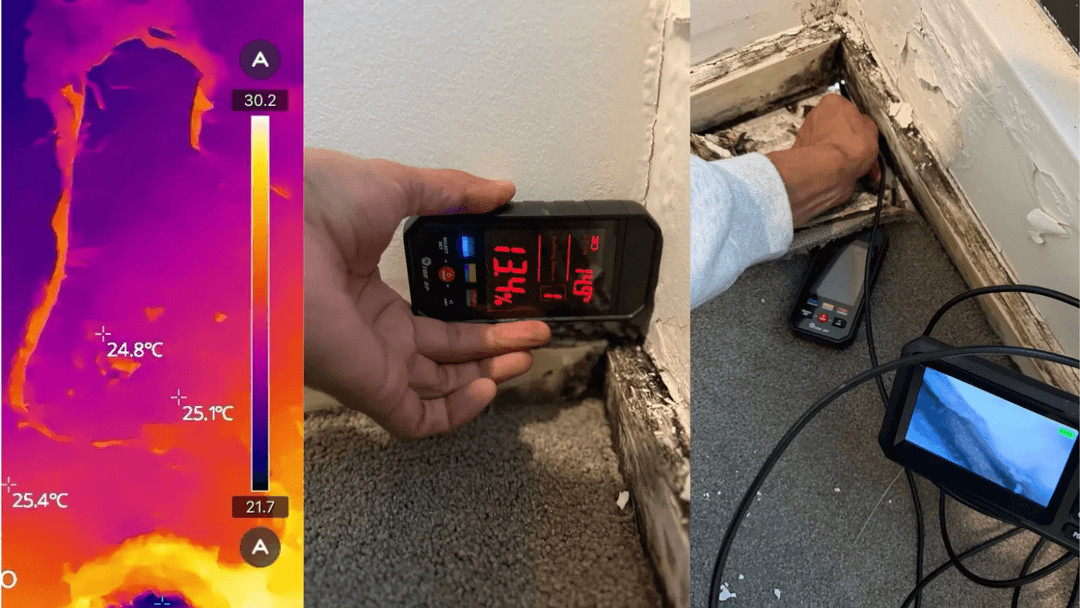
Ask any waterproofer how they will find where the water is actually coming from. If the answer is a confident plan to locate the cause, you are talking to the right kind of operator. If it is "we will just roll a membrane on it", keep looking. We go into this in detail in how leak detection finds a hidden leak's real source, and why patching alone leads to a leak that keeps coming back.
A warranty that actually means something
A warranty is only as good as the business behind it and the words on the page. Ask for it in writing, and ask what it actually covers: the membrane, the workmanship, or both. A single warranty covering the whole repair is worth far more than a product warranty that leaves the labour uncovered.
It is also worth knowing your rights. In Victoria, building work carries implied warranties under the Domestic Building Contracts Act, and all work is covered by the consumer guarantees in the Australian Consumer Law. These sit above anything a contractor writes and cannot be signed away. A good operator will be comfortable talking about this. One who gets cagey when you raise warranty is telling you something.
One team for the whole job
Follow the registered-builder point to its conclusion and you get the practical test: can this contractor handle everything the repair needs, or just their slice of it?
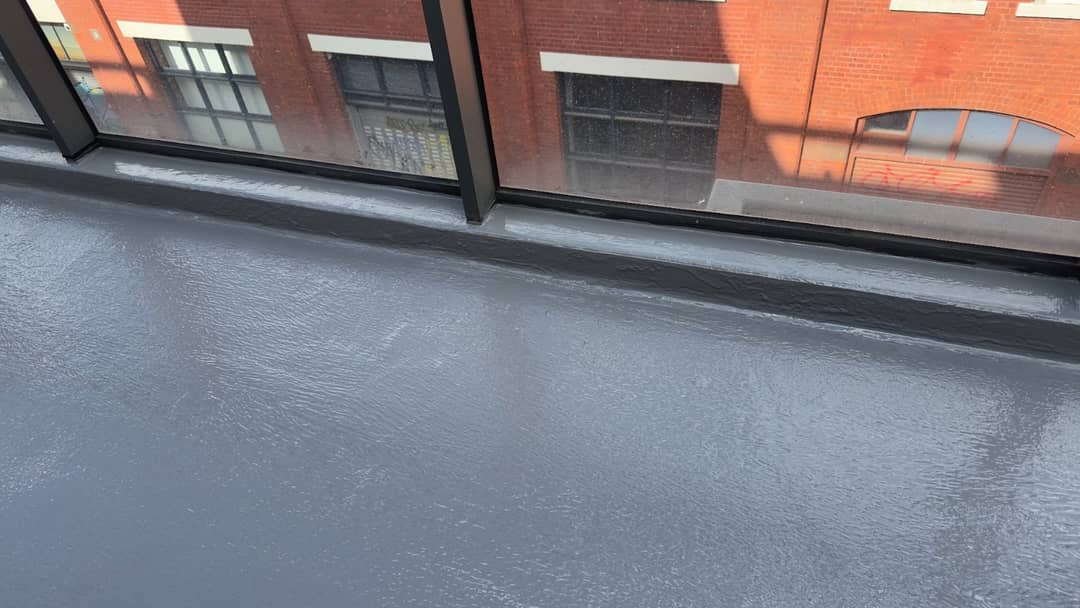
A waterproofing failure on a balcony is rarely only a membrane job. It is usually the membrane, new screeds, re-tiling and polishing the finishes. When one team carries all of that, you deal with a single accountable contractor, one quote, one timeline and one point of responsibility. When it is split across trades, the gaps between them are exactly where the next leak starts. You can see how this plays out on a real job in our guide to balcony waterproofing and rectification.
Do they understand strata and commercial work?
If your leak is in an apartment, a townhouse or a commercial building, the right waterproofer needs more than technical skill. They need to understand how these buildings work.
A leak in common property is rarely just a repair. It is an owners corporation that needs a decision, lot owners who want it resolved, and a manager caught in the middle. A contractor who works in strata regularly, and is active in the strata community through a body like the SCA, will give you clear, documented findings on the cause, which is exactly what a committee or an insurer needs to decide who pays and move forward. If you are untangling that side of it, our post on who pays for a leaking balcony in strata is a good place to start.
Red flags to walk away from
- No VBA registration number, or reluctance to share one.
- No written scope or quote, or a push to work cash.
- Cannot produce current insurance certificates.
- Prices a repair before working out where the water is getting in.
- Quotes a price that is far below everyone else, which usually means a patch, not a fix.
- Vague or evasive about warranty.
Questions to ask before you hire
You do not need to be an expert to pick a good waterproofer. You just need to ask the right questions and listen to how they answer:
- Are you a registered building practitioner, and what is your VBA number?
- What public liability and professional indemnity cover do you carry?
- How will you find where the water is actually getting in?
- Does your warranty cover both the membrane and the workmanship, in writing?
- Will you handle the whole repair, including any concrete, tiling and finishes?
- Have you done work like this in strata or commercial buildings before? (provide references)
The best waterproofer for your building is not the one who tops a directory list. It is the one who finds the cause, fixes it properly, stands behind the work, and can show you the licence and cover to back it up.
If you have a leak in Melbourne that needs finding and fixing properly by a reputable contractor, we offer free on-site assessments. Get in touch with Advance Waterproofing and we will come and take a look.