
5 min read
How Leak Detection Finds a Hidden Leak's Real Source
When a leak has no obvious source, specialists use thermal imaging, moisture meters, cavity cameras and flood testing to trace it. Here is how each works.
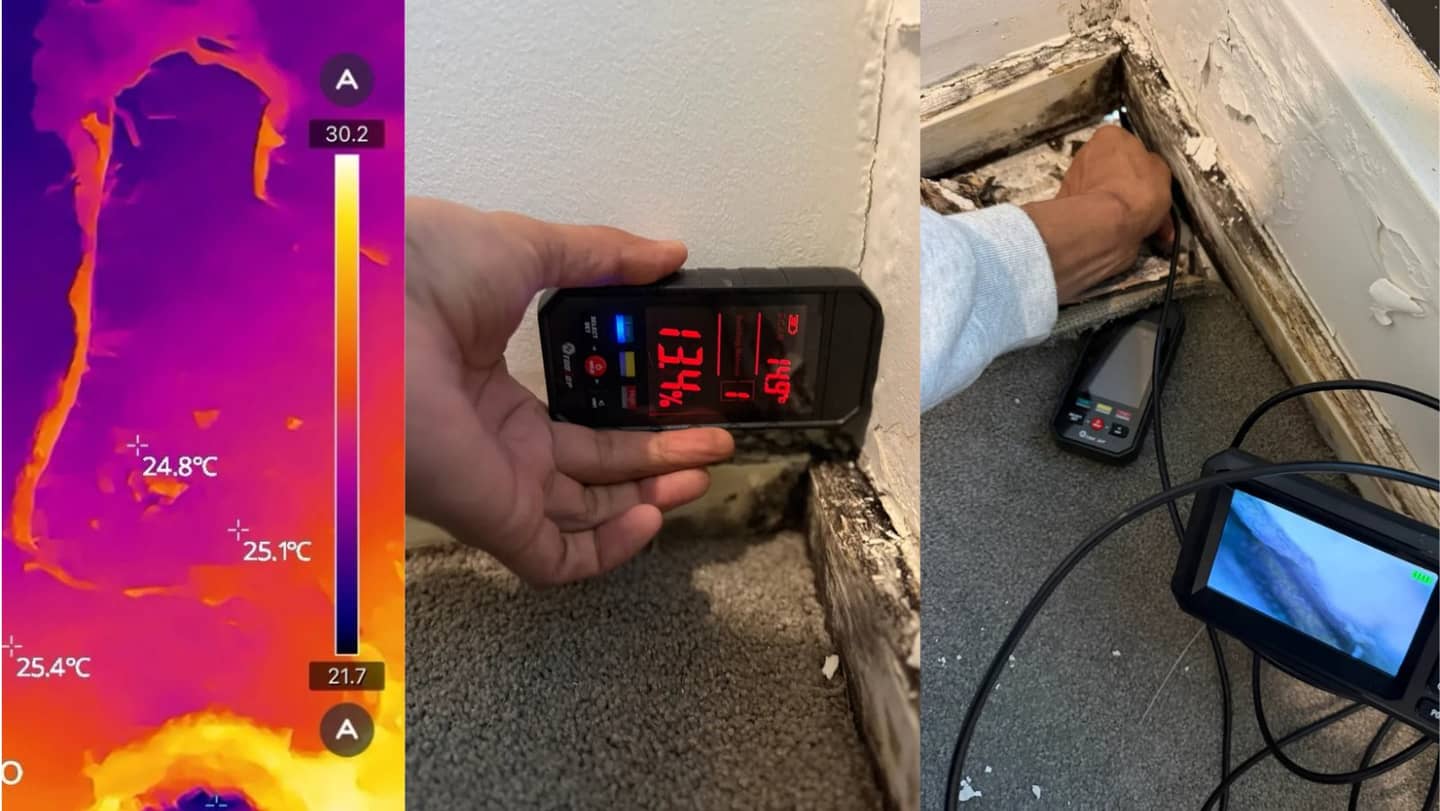
When you can see the damage but not the leak
One of the most frustrating problems in any building is a leak you cannot locate. There is a water stain on a ceiling, a damp patch on a wall, or mould appearing in a corner, but no obvious source. You look directly above it and find nothing wrong. The leak is clearly there, the evidence is on the wall, but where the water is actually getting in is a mystery.
This is extremely common, and there is a reason for it. Water rarely comes out anywhere near where it gets in. It enters at one point, travels along the structure, and surfaces somewhere else entirely. So the search for the source is not guesswork, it is a proper investigation using specific tools. This article explains the main leak detection methods and how each one helps trace a hidden leak back to where it genuinely starts.
Why you cannot just look for the leak
Before the methods, it helps to understand why finding a leak is harder than it sounds. Water follows the path of least resistance. It runs along the top of a concrete slab, tracks down a beam, moves under tiles or screed, and only drops through when it reaches a crack or a low point. The stain marks that exit, which can be metres from the entry.
This is why simply opening up the ceiling below a stain, or resealing the spot above it, so often fails. You are looking at the exit, not the entrance. Proper leak detection works backwards from the visible damage to the true source, and to do that reliably, specialists rely on tools that reveal what the eye cannot see.
The main leak detection methods
No single tool finds every leak. A proper investigation usually combines several, each revealing a different piece of the picture, until the source is confirmed. Here are the ones that do most of the work.
Thermal imaging
A thermal imaging camera detects small differences in surface temperature. Because damp areas hold and conduct heat differently to dry ones, water moving through a structure often shows up as a temperature pattern that is invisible to the naked eye. This lets us see the likely path water is taking behind a wall or above a ceiling, without opening anything up. It is a fast, non-destructive way to narrow down where to look before going further.
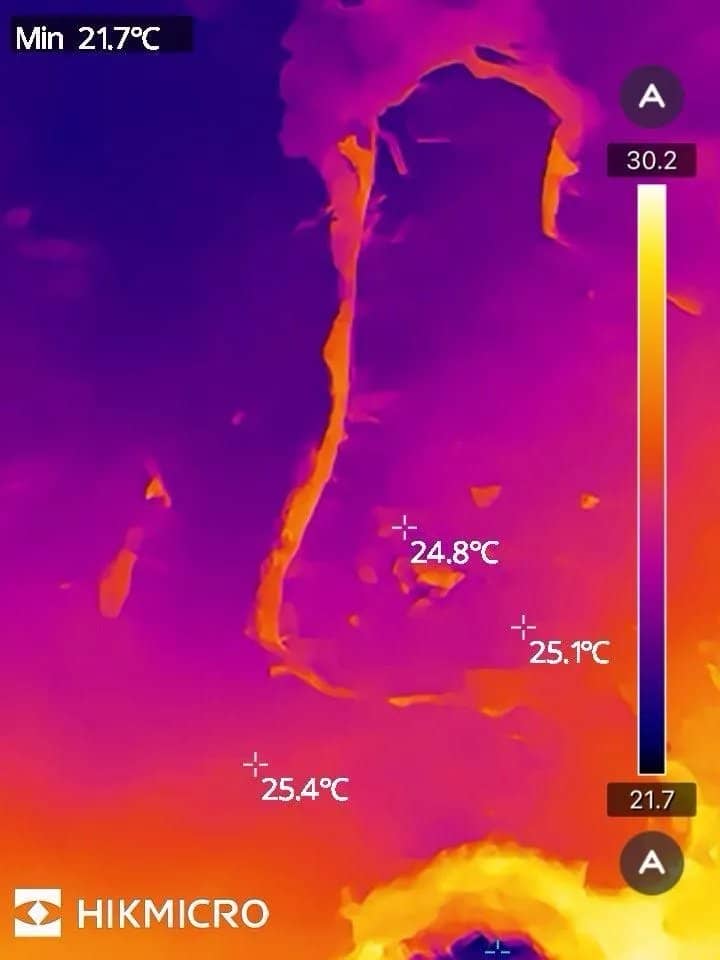
Thermal imaging is powerful for pointing to the affected area, but it shows where moisture is, not always where it entered. That is why it is usually a starting point rather than the final answer.
Moisture meters
A moisture meter measures how much moisture is present in a material at a specific point. Where thermal imaging gives a broad picture, a moisture meter confirms it with hard readings. By taking readings across a surface, we can map where the moisture is highest and follow that trail toward the source, distinguishing genuinely wet areas from ones that just look stained.
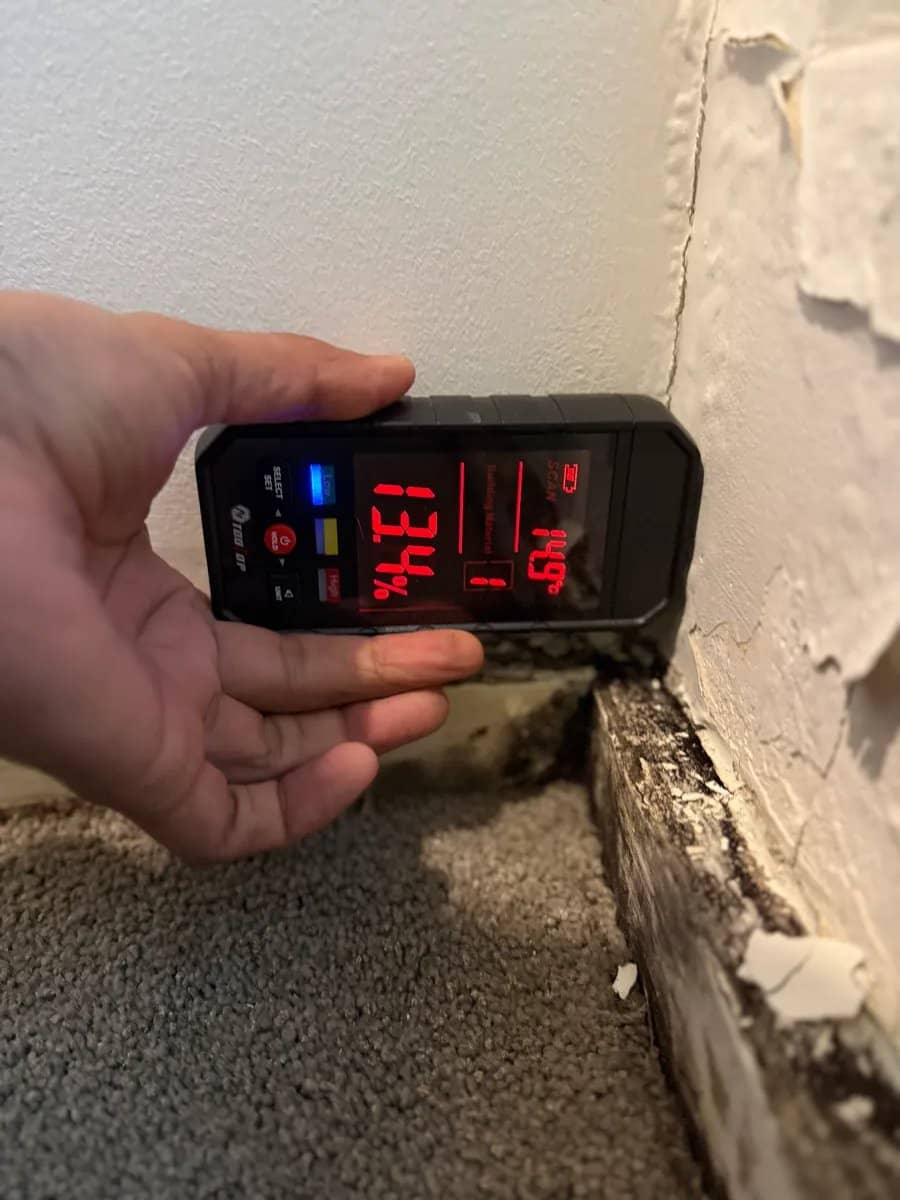
Moisture mapping is especially useful for confirming whether a repair has actually worked, the readings should drop back to normal once the source is fixed and the structure dries out.
Cavity cameras
Some of the most important parts of a building are hidden inside cavities, wall voids, and gaps beneath finishes. A cavity camera, a small camera on a flexible probe, lets us see inside these spaces through a small access point, without demolishing anything. We can inspect the inside of a crack, look behind a wall, or check a concealed junction to see where water is tracking and what has failed.
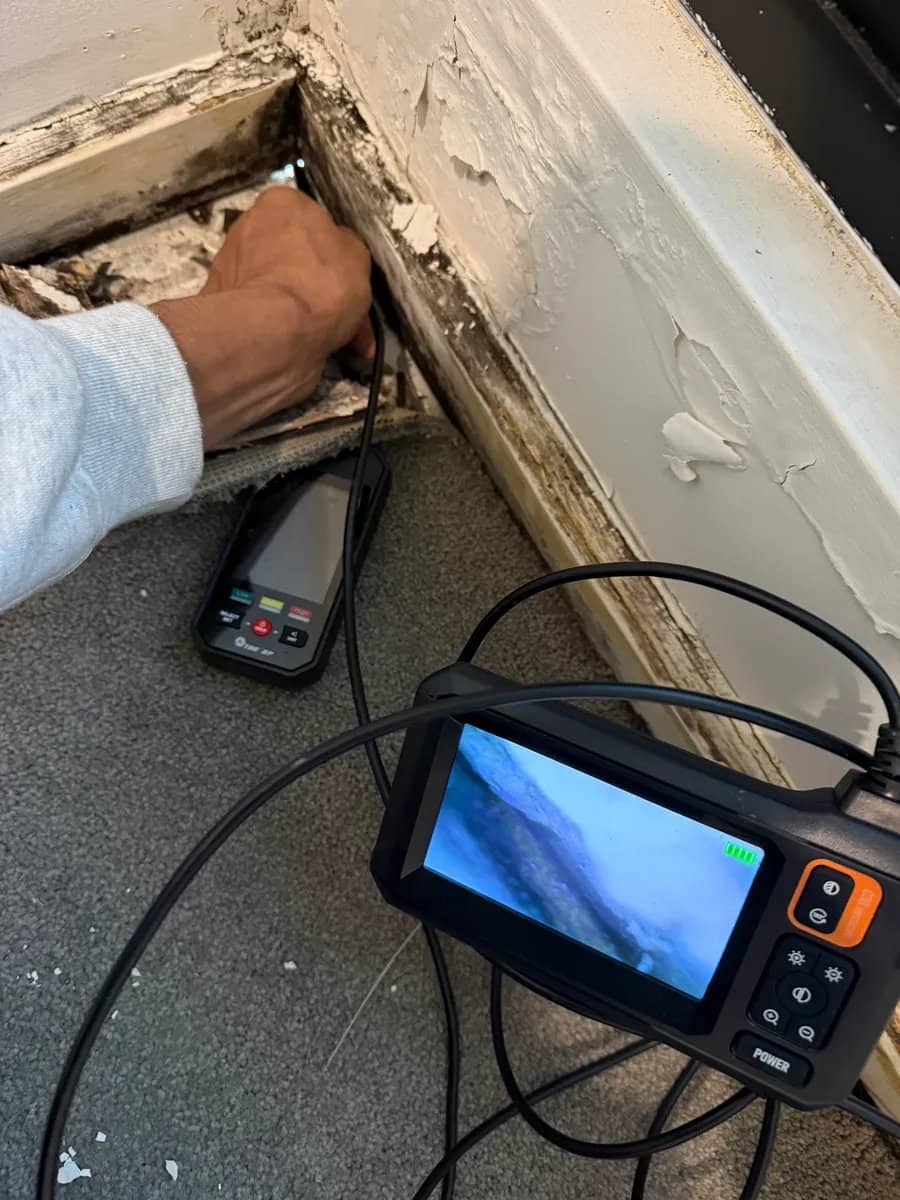
This is what turns a suspicion into a confirmed finding. Thermal and moisture readings might point to an area, and the cavity camera lets us actually look inside it and see the problem, all while keeping the investigation minimally invasive.
Flood testing
Flood testing is the most direct method of all. It involves deliberately and carefully introducing water to a specific area, a balcony, a section of roof, a wet area, and controlling exactly where it goes, then watching to see if and where it appears below. By isolating one area at a time, we can prove exactly which part of a surface is letting water in, rather than inferring it.
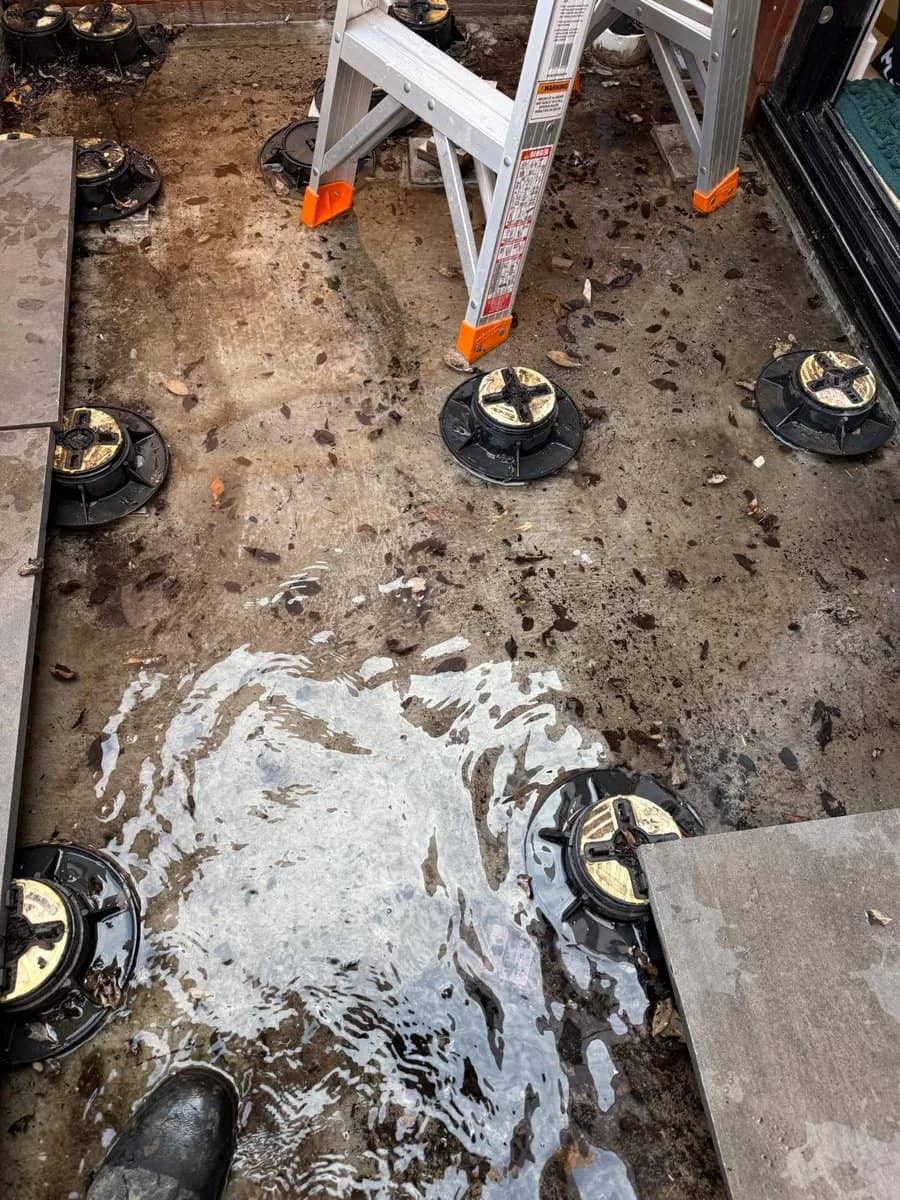
Flood testing is particularly valuable in strata disputes, because it produces clear, demonstrable evidence. When you can show that water introduced to a specific balcony appears in the unit below, there is no argument left about where the leak is coming from.
Why the tools matter more in strata buildings
In a strata or owners corporation building, finding the true source is not only about fixing the leak. It also decides who is responsible for paying for it. A leak that appears in one lot may be entering through common property, or through another lot entirely, and the difference determines who wears the cost.
This is why proper leak detection is so valuable in a strata context. A confirmed, evidence-based diagnosis does two things at once: it identifies the repair that will actually work, and it settles the question of responsibility with a fact rather than an argument. Guesswork does neither, and getting it wrong can mean the wrong party pays and the leak still comes back.
You cannot fairly decide who pays for a leak until you know where the water is genuinely getting in. The investigation is what ends the dispute.
What to expect from a proper leak investigation
A thorough investigation does not rely on one tool or one reading. It combines them, thermal imaging to narrow the area, moisture readings to confirm it, a cavity camera to see inside, and flood testing to prove the source, building a complete picture before any repair is recommended. The goal is to be certain of the cause before anyone spends money fixing it.
Done properly, this is almost always cheaper than the alternative: repeated repairs to the wrong spot, ongoing water damage, and, in strata, months of dispute over who is responsible. Finding the source once is the step that makes everything after it work.
Get the source found properly
At Advance Waterproofing, finding where the water is genuinely getting in is where every job starts. We use these methods to trace a leak to its true source, and because we are a registered building practitioner, we can then carry out the full repair, including any associated trades, and document it for a committee or an insurance claim.
If you have a leak nobody can locate, we offer free on-site leak assessments across Melbourne. Book a free leak assessment and we will find where the water is actually coming from.
This article is general information only. The right combination of detection methods depends on the building and should be determined on site.