Building remediation in Melbourne
Spalling concrete, corroded reinforcement and the structural repair a long-running leak leaves behind, carried out alongside the waterproofing rather than after someone else has finished.
Stopping the water is only half the repair
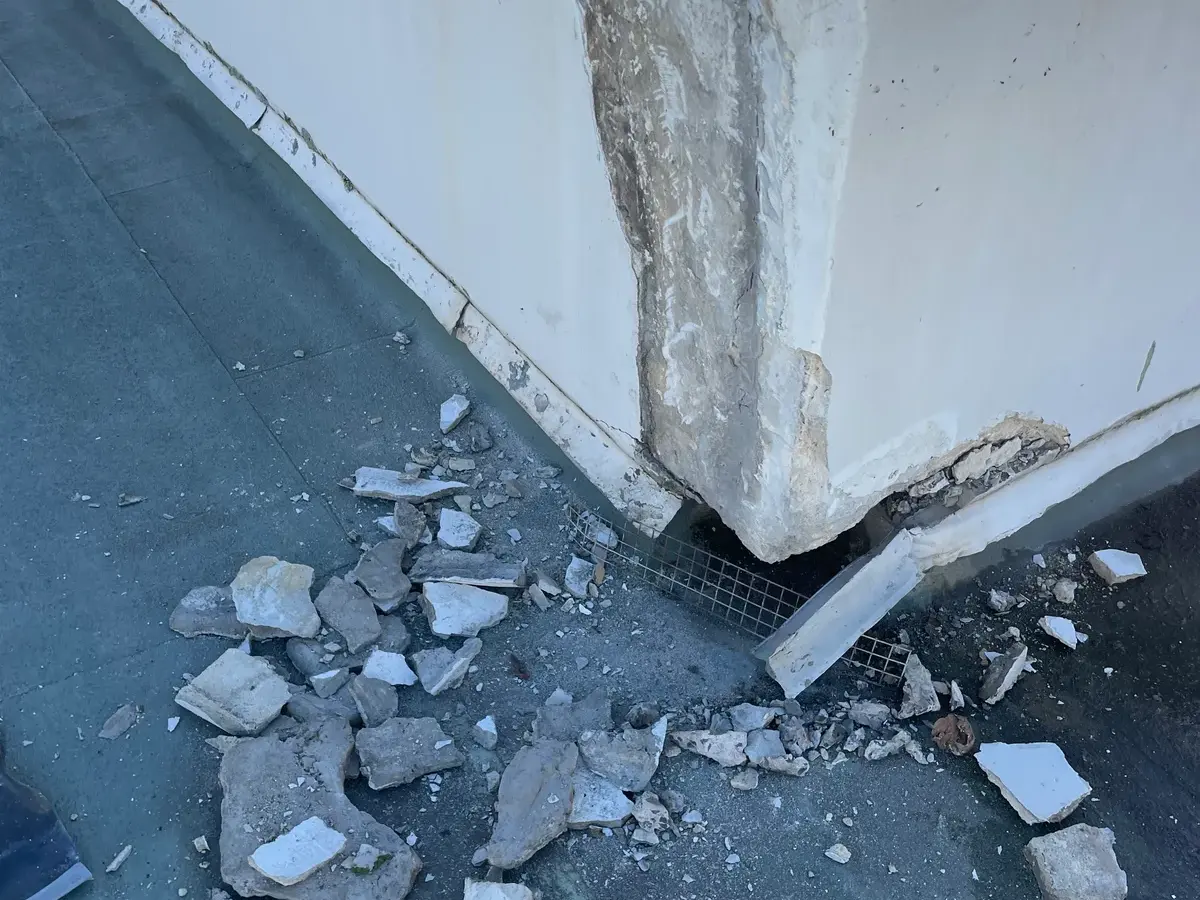
Water that has been getting into a structure for years does not just leave a stain. It carries through the concrete to the steel reinforcement inside it and rusts it, and rusting steel expands - which cracks the concrete off from the inside. By the time that is visible as spalling, a crack line or a rust-coloured bloom, the problem is structural rather than cosmetic.
Waterproofing over it hides that rather than fixing it. So the order runs the other way: the damaged concrete comes out back to sound material, the reinforcement is treated, the section is reinstated, and only then does a membrane go on.
Because we are a registered building practitioner as well as a licensed waterproofer, the remedial building works and the waterproofing are one contract - the concrete repair, the injection, the junction detailing and the making good afterwards. There is no handover between trades for a defect to fall through, and one contractor is accountable for the result.
One job, or five phone calls
A remediation is rarely one trade. The difference is whether you are the one holding it together.
Managing it yourself
- 5
- Contacts
- 5
- Warranties
- 5
- Visits
With us

- 1
- Contact
- 1
- Warranty
- 1
- Visit
What a remediation can involve
Rarely one trade, and rarely only the thing you can see.
- Waterproofing Remediation
- Balconies, bathrooms and common areas where the original workmanship has failed and the repair has to be final - membranes laid without bond breakers, falls that do not drain, penetrations left unsealed. Balconies and terraces, shower recesses and wet areas, podium decks, planter boxes, walkways, stairwells and lift wells, and below-ground structures.
- Water Ingress Rectification
- Fixing the cause rather than the symptom. A stain on a ceiling can start metres away, so the work is at the entry point: failed or corroded flashings at parapets, penetrations and window junctions; non-compliant roof pitch, laps, box gutters and blocked drainage; external wall defects, failed sealant joints and missing cavity drainage; and the junctions at movement joints, balustrade fixings and thresholds.
- Replacement of Structural Framework
- Framing compromised by long-term ingress, or by the defective installation of what was fixed to it. Rot-affected members come out, engineered replacements go in, and the surrounding envelope is corrected so the same water does not simply find the new timber. Delivered with engineering input and certification for the owner’s records.
- Substrate Rectification
- Floor levelling, concrete filling, grinding and surface preparation, to leave a sound and compliant base for the membrane, the floor covering and the finishes. No membrane performs better than the substrate underneath it.
- Defects & Damage Rectification
- Building defects past handover, together with the consequential damage traced back to the same cause - plaster, flooring, skirting, joinery, windows and doors. One scope covering the defect and everything it caused, which is the form a claim has to be closed in.
How the work runs
Not every job needs every step. What it does need is established before you are asked to approve anything.
Establish the extent
Where the water has been getting in and how far it has carried, using moisture mapping and thermal imaging where the damage sits behind finishes rather than out in the open.
Survey the concrete
Spalling, cracking and the depth of cover over the reinforcement. A covermeter survey shows how deep the steel sits and which areas are most at risk of going next.
Break out and treat
Damaged concrete removed back to sound material, then the exposed reinforcement cleaned and treated. Reinstating over corroded steel just buys a few years.
Reinstate and inject
Repair mortars back to profile, and injection where the crack itself is the path - polyurethane where it has to stay flexible and seal, epoxy where the section has to carry load again.
Waterproof over sound substrate
The membrane and the junction detailing, to AS 4654 externally and AS 3740 in wet areas, so the cause is closed off rather than covered over.
Make good and hand over
Render, tiling and finishes reinstated, then handed over with the documentation and the warranty.
Frequently asked questions
Waterproofing keeps water out. Remediation repairs what the water did on its way in - concrete that has spalled, reinforcement that has corroded, render and finishes that have broken down. A building with a long-standing leak usually needs both, in that order: the damage is made good first, then the membrane goes on over sound substrate.
Concrete cancer is what happens when water reaches the steel reinforcement inside concrete and rusts it. Rusting steel expands, and that expansion cracks the surrounding concrete off from the inside, which is why it shows up as spalling, cracking or a rust-coloured stain. In most cases it is repaired rather than replaced: the damaged concrete is broken out back to sound material, the reinforcement is exposed and treated, and the section is reinstated. How far it has gone is what decides that, which is why it is assessed on site first.
By establishing the extent before quoting rather than after. Moisture mapping and thermal imaging show where water has travelled behind finishes, and a covermeter survey shows how deep the reinforcement sits and where it is most at risk. That produces a scope you can put to a committee, instead of a low number that grows once the work opens up.
It depends on which product the crack calls for, and the two are not interchangeable. Polyurethane stays flexible and seals a crack that still moves, which is what you want where the job is to stop water. Epoxy is rigid and bonds the two faces back together, which is what you want where the section has to carry load again. Injecting the wrong one is why some repairs reopen.
Yes. We are a registered building practitioner with the Victorian Building Authority as well as a licensed waterproofer, so the concrete repair, the injection, the membrane and the making good afterwards sit under one contract. There is no handover point between a builder and a waterproofer for a defect to fall through.