
5 min read
Balcony Leaking in Strata? Who Pays for It in Victoria
When a balcony leaks in a Victorian strata building, the fight is usually over who pays. Here is how it is decided and the first move to make.
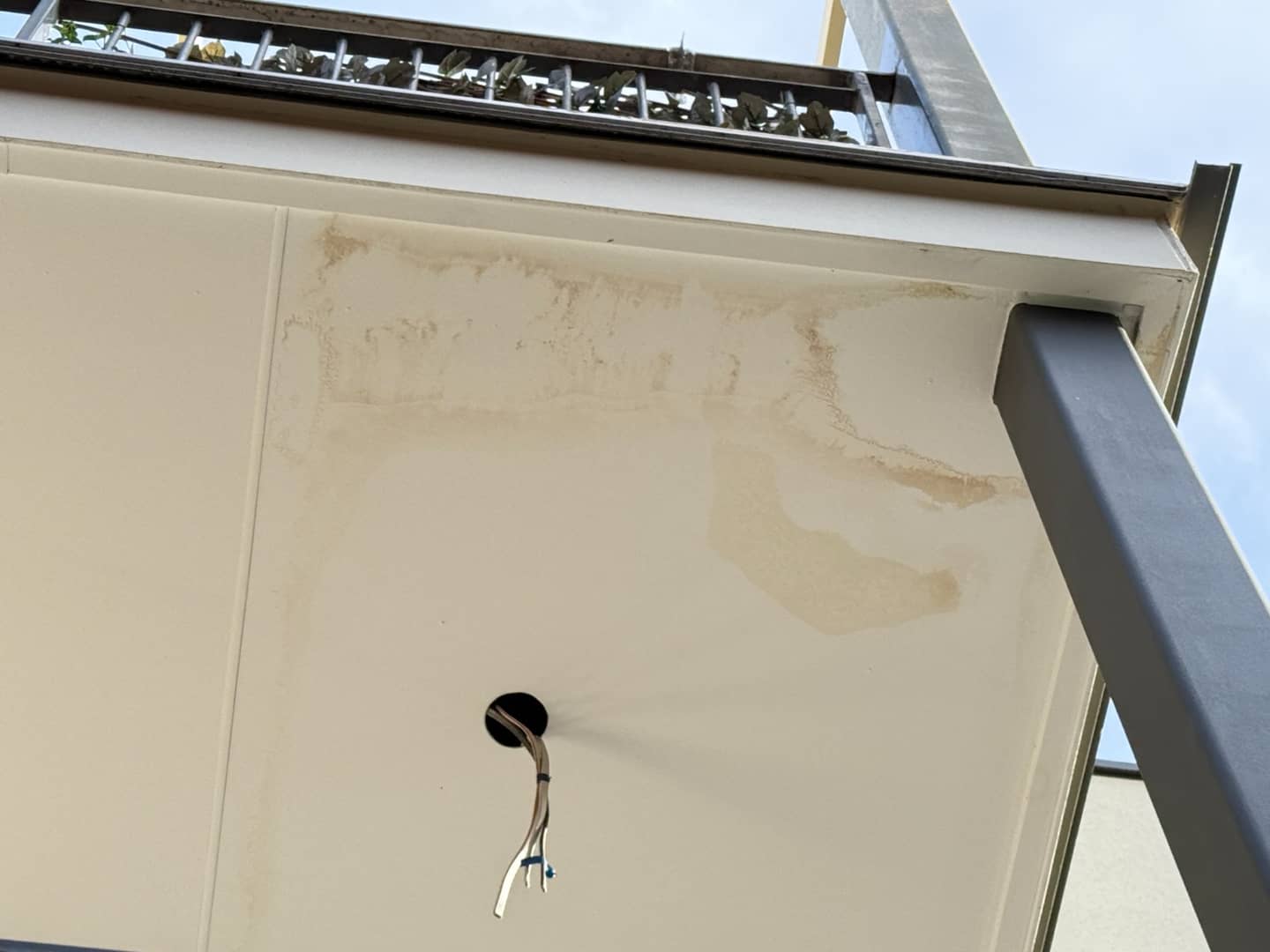
The real problem with a leaking balcony is not the water
When a balcony starts leaking in a strata or owners corporation building, the water is rarely the hardest part to deal with. The hardest part is the question that comes straight after it: who is responsible for paying to fix it?
The owner downstairs, staring at a stain spreading across their ceiling, assumes it is the building's problem. The owner upstairs, whose balcony sits above that stain, insists it has nothing to do with them. The committee wants it resolved but does not want to fund it. And the strata manager is stuck in the middle, refereeing an argument while the water keeps doing damage.
This article breaks down how balcony responsibility is actually decided in Victoria, why these disputes drag on, and the single most useful thing you can do to end the standoff. It is general information, not legal advice, but it will help you understand where you stand.
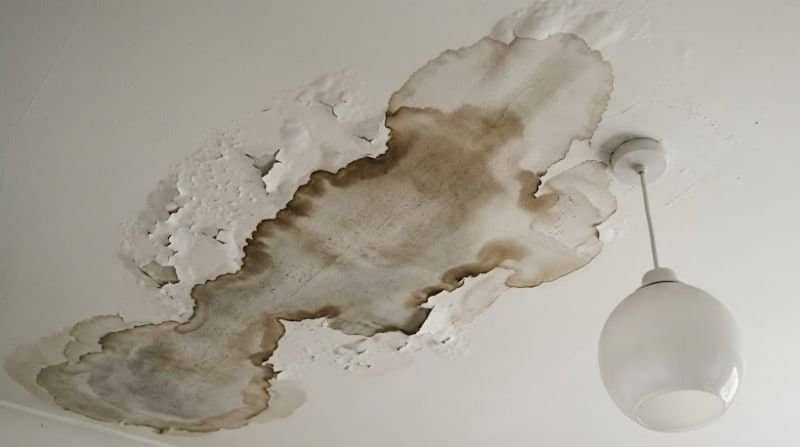
Common property or lot owner? It depends on the plan of subdivision
In Victorian strata, the instinct is to assume the balcony belongs to the owner whose apartment it is attached to. Sometimes that is true. Often it is not, and that is where the confusion begins.
Responsibility for a balcony is generally split between what is common property (the owners corporation's responsibility) and what is lot property (the individual owner's responsibility). Which parts fall where is determined by the building's plan of subdivision, the legal document that defines the boundaries of each lot.
As a rough guide, in many buildings the split looks like this:
| Element | Usually the responsibility of |
|---|---|
| The structural slab of the balcony | Owners corporation (common property) |
| The waterproofing membrane | Owners corporation (common property) |
| The tiles or surface finish | Often the lot owner |
| The balustrade or railing | Varies by plan of subdivision |
The critical point for waterproofing is this: the membrane is usually common property. That means when a balcony leaks because the waterproofing has failed, it is typically the owners corporation's responsibility to repair, even though the leak is coming from what looks like a private balcony, and even though the damage is appearing in a completely different lot below.
Every building is different, so the plan of subdivision must be checked in each case. But this general pattern is why so many balcony leaks end up being the owners corporation's cost, once the source is properly identified.
Why these disputes drag on for months
The reason a leaking balcony can sit unresolved for months is not usually the repair itself. It is the deadlock over responsibility. And that deadlock is almost always caused by one thing: nobody actually knows where the water is getting in.
Here is how the standoff forms:
- The stain appears in the lower unit, so the lower owner assumes the source is the balcony directly above.
- The upper owner sees no problem on their own balcony, so they assume it is nothing to do with them.
- Nobody wants to pay for an investigation, because they fear that paying for it means admitting it is their problem.
- While everyone argues, the water keeps travelling and the damage keeps spreading.
You cannot fairly allocate responsibility for a leak you have not located. Finding where the water enters is what makes deciding who pays possible.
This is the trap. The responsibility question cannot be answered until someone finds the source, and the source cannot be found until someone commissions an investigation. So the two sides wait for each other, and the building keeps getting wetter.
Water rarely leaks where it shows up
There is a further complication that makes balcony leaks especially hard to allocate. Water does not travel in a straight line. It enters at one point, tracks along the structure following the path of least resistance, and surfaces somewhere else entirely.
A leak that appears above one apartment may have entered through a failed detail metres away, on a different balcony, or at a wall junction, or a planter, and simply travelled until it found the first crack to drop through. This is why treating the stain, or blaming the balcony directly above it, so often fails. The visible damage marks the exit, not the entry.
This is also why a proper diagnosis matters so much in a strata context. Getting it wrong does not just waste money on the wrong repair. It can pin the cost on the wrong party, which is both unfair and, once discovered, expensive to unwind.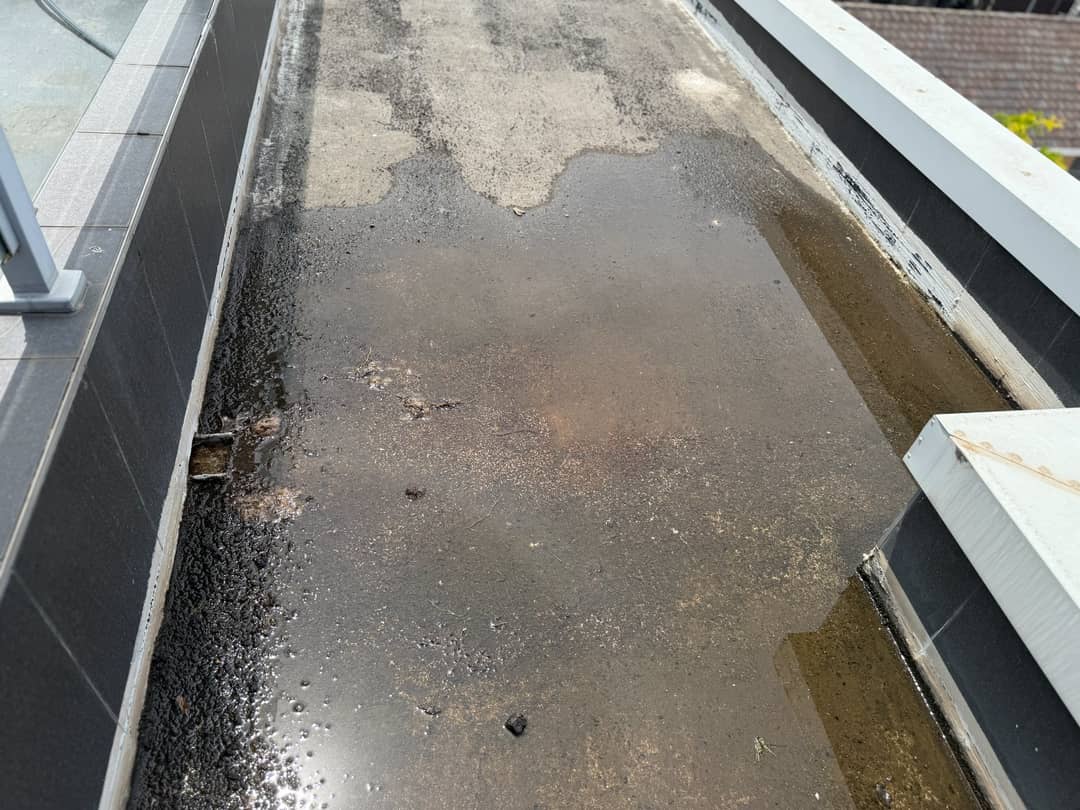
The first move that ends the standoff
If you are a strata manager or committee member dealing with a leak that nobody will claim, the most effective thing you can do is separate the two questions that everyone is trying to answer at once.
- Where is the water actually getting in? This is a technical question, answered by investigation, not by argument.
- Who is responsible for that? This is answered by the plan of subdivision, once you know where the water is coming from.
Trying to answer the second question before the first is what keeps these disputes alive. Once a proper leak investigation identifies the source, the responsibility question usually answers itself. If the failure is in the common-property membrane, it is the owners corporation's cost. If it is genuinely something within a lot, that is clear too. Either way, the argument ends with a fact instead of a stalemate.
The investigation is almost always cheaper than another month of the dispute, the ongoing water damage, and the deteriorating relationships between owners.
How Advance Waterproofing approaches balcony leaks
We specialise in remediation, the buildings that are already leaking, not first-coat waterproofing on new work. When we are called to a balcony leak in a strata building, the job starts with finding where the water is genuinely getting in, not just treating where it shows up.
Because we are a registered building practitioner, we can also carry out any associated trades the repair requires, concrete repair, tiling, structural works, so the whole job is handled by one team rather than several separate contractors. And where you need the findings formally documented for a committee or an insurance claim, we can provide a full report.
If you have a balcony leak stuck in a who-pays argument, the fastest way out is usually to find the source. Book a free on-site assessment and we will work out where the water is actually coming from.
This article is general information only and is not legal advice. Responsibility for balcony repairs depends on your building's plan of subdivision and individual circumstances. For advice on your specific situation, consult a qualified strata lawyer.