
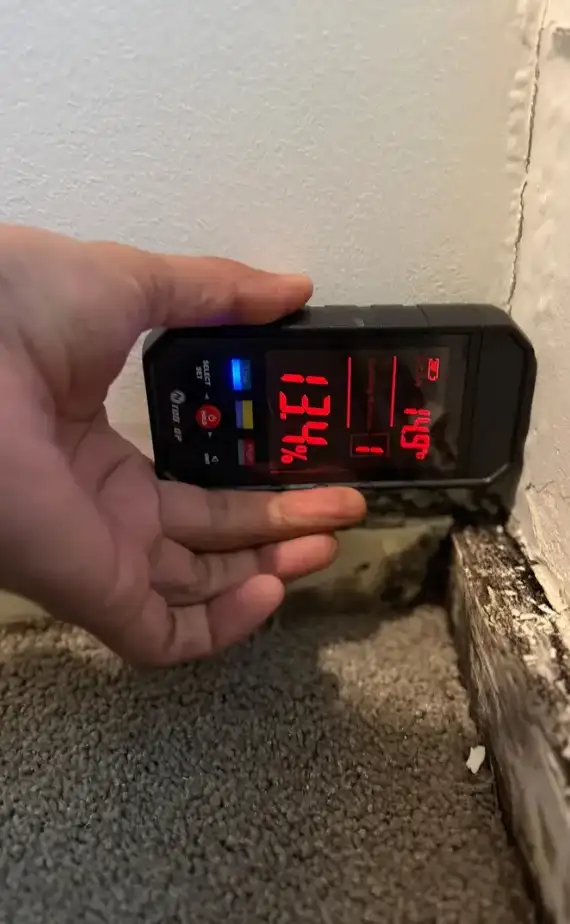
Forensic leak investigation in Melbourne
Don't guess where the water is coming from. We pinpoint the source with moisture mapping and thermal imaging, so the repair is targeted instead of speculative.
Read a real report before you book
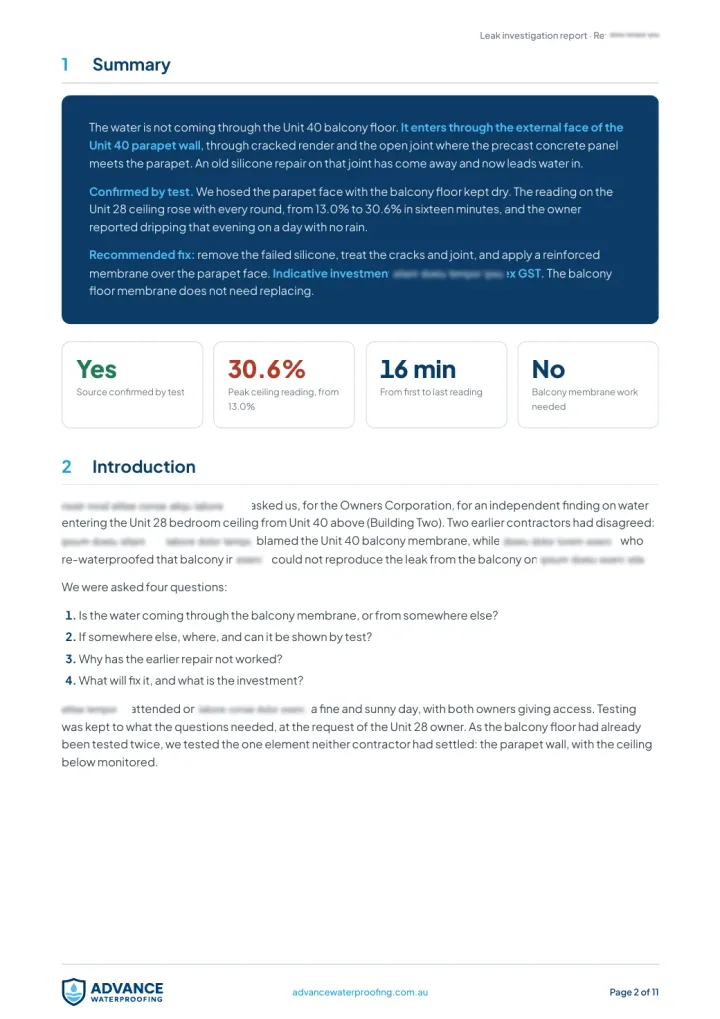
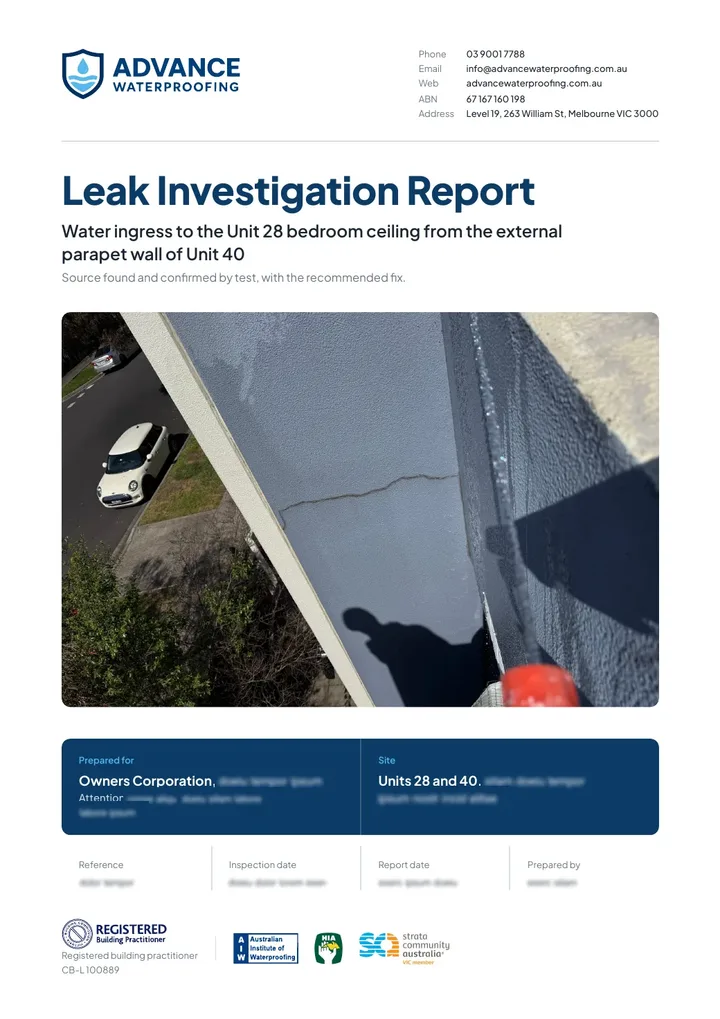
A forensic leak investigation from one of our jobs, with the client and the address taken out. It is what you get from us: the findings, the root cause, the photographs and readings behind it, and the scope for the repair.
Find the source before the repair
Most leaks we are called to have already been sealed once or twice by someone who never established where the water was entering. Finding that first is the whole job.
Water rarely comes out where it gets in, so the stain is seldom the source. We trace it back from the surface, and only open something up when that is the smallest way to confirm the answer.
How we find it
It starts with the surfaces, drainage, joints and waterproofing details looked over on site. Then the tools, read from the surface first and opened up only where they have to be.
Moisture mapping
Electronic readings that show where water has spread beneath tiles and finishes.
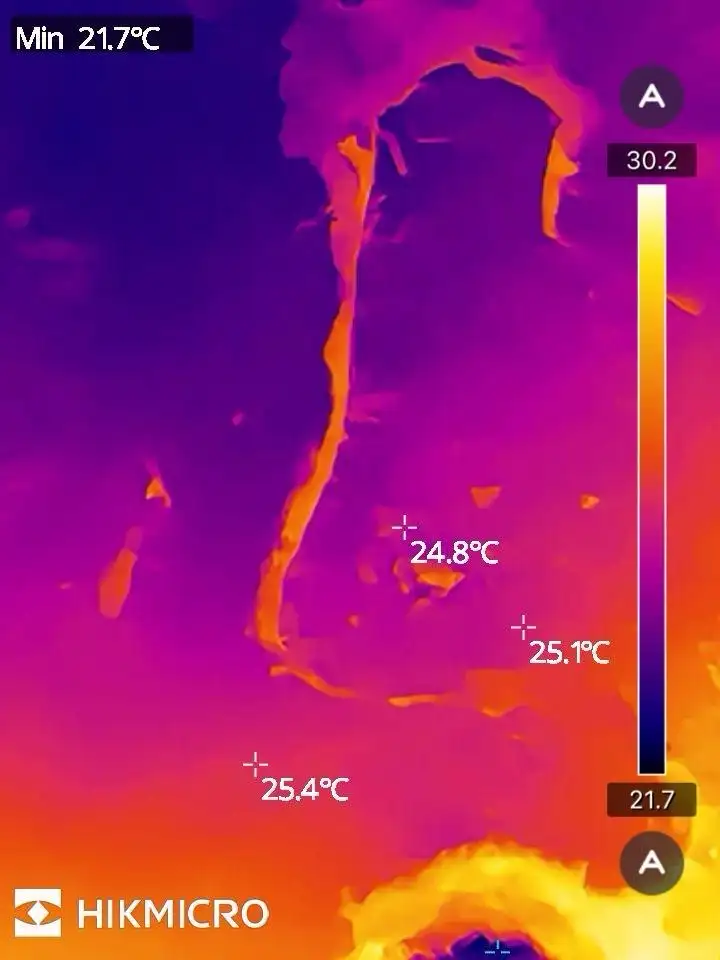
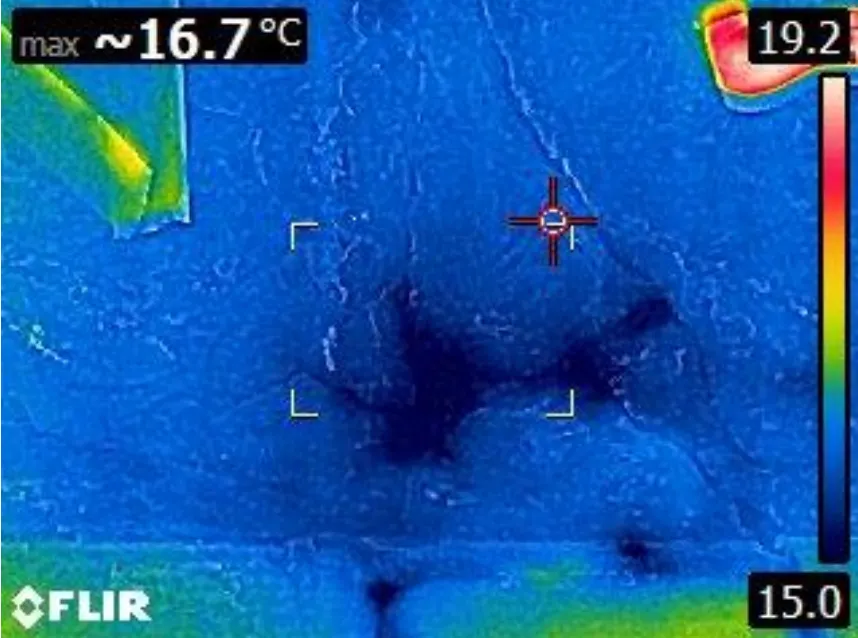
Thermal imaging
Moisture pathways and hidden leaks located without opening anything up.
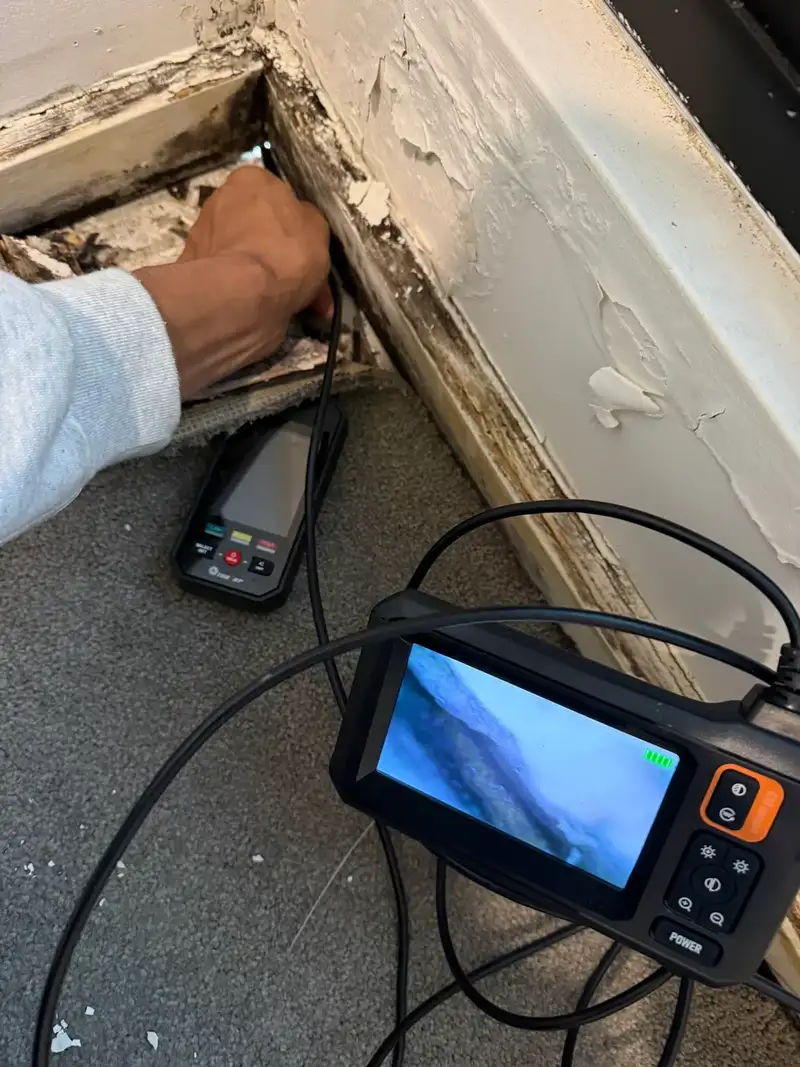
Cavity cameras and flood testing
A camera behind linings, or a controlled flood test, where the source still has to be confirmed.
A report you can act on
Written so it can go straight to an owners corporation, a strata manager or an insurer, with a clear scope for the repair rather than a list of possibilities.
- High-resolution photographs
- Moisture readings from site
- The root cause
- A scope of works for the repair
Frequently asked questions
Finding the source of a leak requires proper investigation rather than guesswork, because water rarely comes out where it gets in. We use thermal imaging, moisture mapping, cavity cameras and controlled flood testing to trace water back to its true entry point. Only once the source is confirmed can the repair be targeted accurately.
How leak detection finds the real sourceCommon signs include water stains on ceilings or walls, damp or musty smells, bubbling or peeling paint, efflorescence (white mineral deposits), drummy or lifting tiles, and cracked or failing sealant around junctions. These often appear well away from where the water is actually entering, so the visible sign is rarely the source.
We carry out waterproofing remediation across balconies, terraces, rooftops, podiums, planter boxes, basements, retaining walls and internal wet areas. Water ingress in any of these areas can be traced and rectified, along with any associated building repairs the job requires.
Not to start with. Moisture mapping and thermal imaging read what is happening behind tiles and linings from the surface, which is usually enough to narrow the leak down to an area. Where something does have to be opened up to confirm the source, it is kept to the smallest area that will answer the question, and you are told before it happens.
The findings, the root cause and the repair recommended, supported by high-resolution photographs and the moisture readings taken on site. It is written so it can go straight to an owners corporation, a strata manager or an insurer, and it gives a clear scope for the repair rather than a list of possibilities.
Because a quote is only as good as the diagnosis behind it. A repair priced without finding the source is a guess, and most of the leaks we are called to have already been sealed once or twice by someone who never established where the water was getting in. Finding it first means the money goes on the repair that fixes it.