
4 min read
Why Your Waterproofing Membrane Needs a UV Top Coat
Skip the top coat and UV light degrades the waterproofing membrane underneath, often through the gaps in pedestal pavers. Here is why it matters.
The step that gets skipped, and wrecks the whole job
When a liquid waterproofing membrane is installed on a rooftop, podium, terrace or balcony, the membrane itself is only part of the system. Most membranes need a UV-protective top coat over the top of them to survive. Skip it, and the membrane that is supposed to protect the building slowly gets destroyed by something completely free and completely unavoidable: the sun.
It is one of the most common corners cut in waterproofing, and because the damage happens slowly and out of sight under pavers, nobody notices until the membrane has already failed and water is getting into the building. It is also one of the easiest failures to prevent, if the system is installed the way the manufacturer intended.
Why UV light destroys a waterproofing membrane
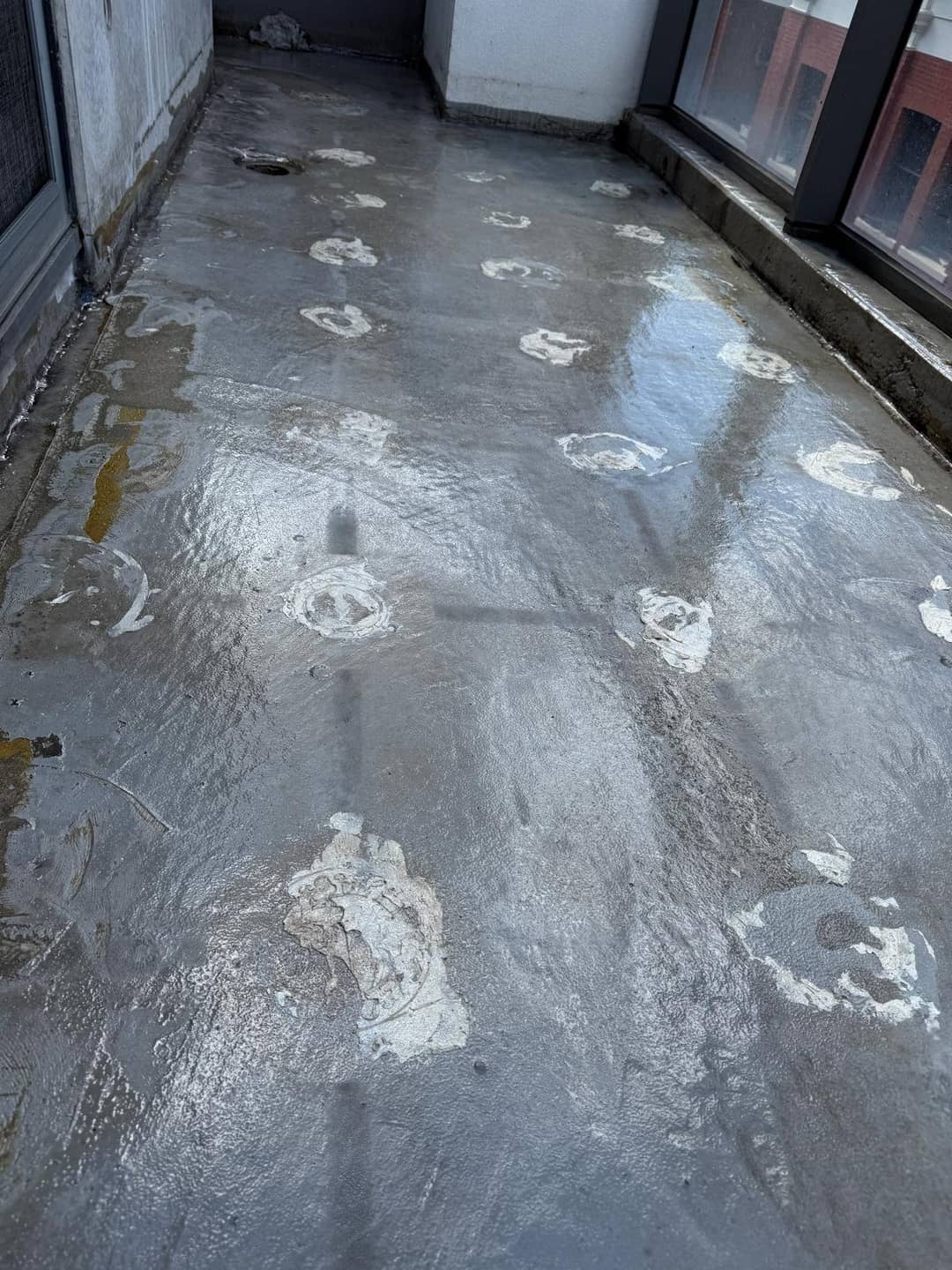
Most liquid-applied waterproofing membranes are not UV stable on their own. Under constant exposure to sunlight, the membrane breaks down, it becomes brittle, loses its flexibility, cracks, and eventually stops being waterproof. This is exactly why manufacturers specify a UV-stable top coat as part of the system: the top coat takes the UV punishment so the membrane underneath does not have to. It is not an optional extra or an upsell. It is what makes the membrane last its intended life instead of degrading in a few years.
In a climate like Melbourne's, with long, bright summers and high UV even on cool days, an unprotected membrane is under attack far more of the year than people realise. The top coat is what stands between that constant exposure and the membrane doing its job.
Why pedestal pavers make this worse
This is where a lot of rooftops and podiums come unstuck. Pedestal paver systems, the ones that sit on little adjustable black pods that raise the pavers off the surface, are popular on rooftops and terraces because they are easy to lift and give access to the drainage below. By design, the pavers are not grouted. There are deliberate open gaps between every paver so water can drain through to the membrane and away.
Those open joints are great for drainage, but they also let light straight through to the membrane. So even though the membrane is "covered" by pavers, it is not protected from UV at all. Sunlight reaches it through every gap, all day, every day. People assume the pavers are protecting the waterproofing underneath. For UV, they are doing almost nothing.
Pavers on pedestals hide the membrane from view, but not from the sun. Without a UV top coat, the light gets straight through the joints.
You can see exactly where it happens
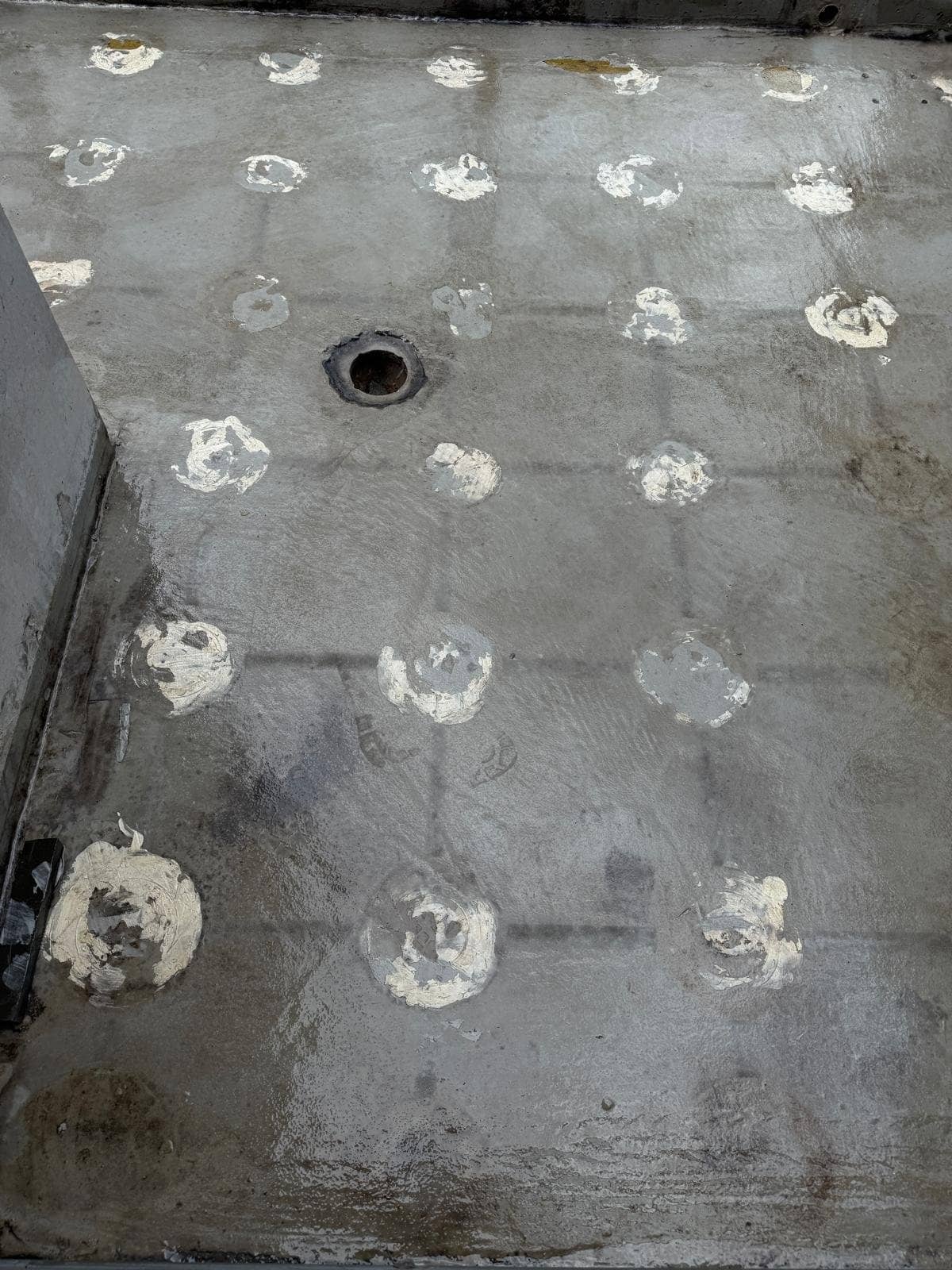
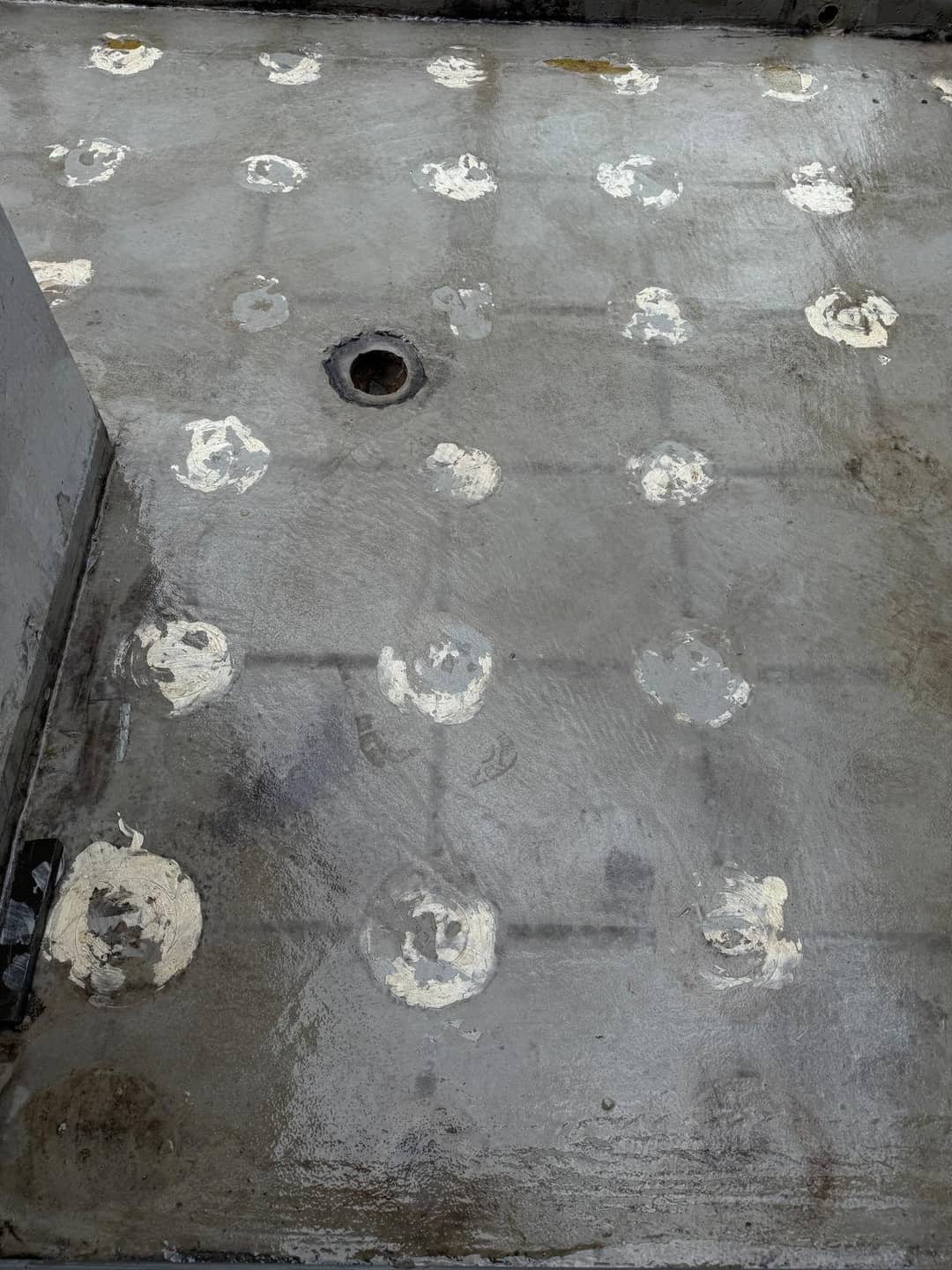
The damage leaves a tell-tale signature. When pavers are lifted off a membrane that was installed without a proper UV top coat, you often see a grid pattern burned into the surface, lines of degraded, discoloured membrane that line up precisely with the gaps between the pavers above. Everywhere light could reach through a joint, the membrane has broken down. Everywhere a paver blocked the light, it is in better condition. It is a clear, visual record of UV slowly destroying the waterproofing, one gap at a time.
Why this matters: a hidden failure
The real danger is that this failure is invisible. The pavers look fine from above, so there is no obvious sign anything is wrong until the membrane has degraded enough to let water through. By then, water is getting into the structure below, and because it is a rooftop or podium, that often means leaks into the spaces underneath. What should have been a membrane doing its job quietly for a decade or more becomes a premature failure and a full re-waterproofing job, all because one coat was skipped at the start.
It is the same pattern we see across waterproofing again and again: the cheapest version of a job on day one becomes the most expensive version a few years later. We explain why that happens more broadly in our article on why a leak keeps coming back after a repair.
What a proper system looks like
Done correctly, a rooftop, podium or paver-covered area should have the membrane installed to the manufacturer's full specification, including the UV-stable top coat where the system calls for it, so the membrane is protected from sunlight even where pavers leave it exposed. It costs a little more at installation and saves an enormous amount later, because it is the difference between a membrane that lasts its full life and one that quietly cooks in the sun. This is also why it pays to use a waterproofer who installs to specification rather than to the lowest price.
How Advance Waterproofing can help
If you have a rooftop, podium or paver-covered terrace in Melbourne and you are not sure whether the waterproofing underneath was done to full specification, it is worth having it checked before it fails. We can lift pavers, inspect the condition of the membrane, and tell you honestly whether it needs a top coat, a repair, or a full re-waterproof. As registered building practitioners, we install and remediate waterproofing to the correct manufacturer specification, top coat included, so it lasts. If a membrane has already degraded, our waterproofing remediation covers putting it right.
We offer free on-site assessments across Melbourne. Book a free assessment and we will check what is really going on under your pavers.
This article is general information only. The correct waterproofing system and top coat for a given area depend on the membrane, the manufacturer's specification and the site, and should be confirmed by an on-site assessment.