
4 min read
Roots Lifting Your Tiles? Why You Cannot Just Re-Lay Them
Roots getting under tiles lift and crack them from below. Re-laying the tiles rarely holds, because the roots come back. Here is what a proper fix involves.
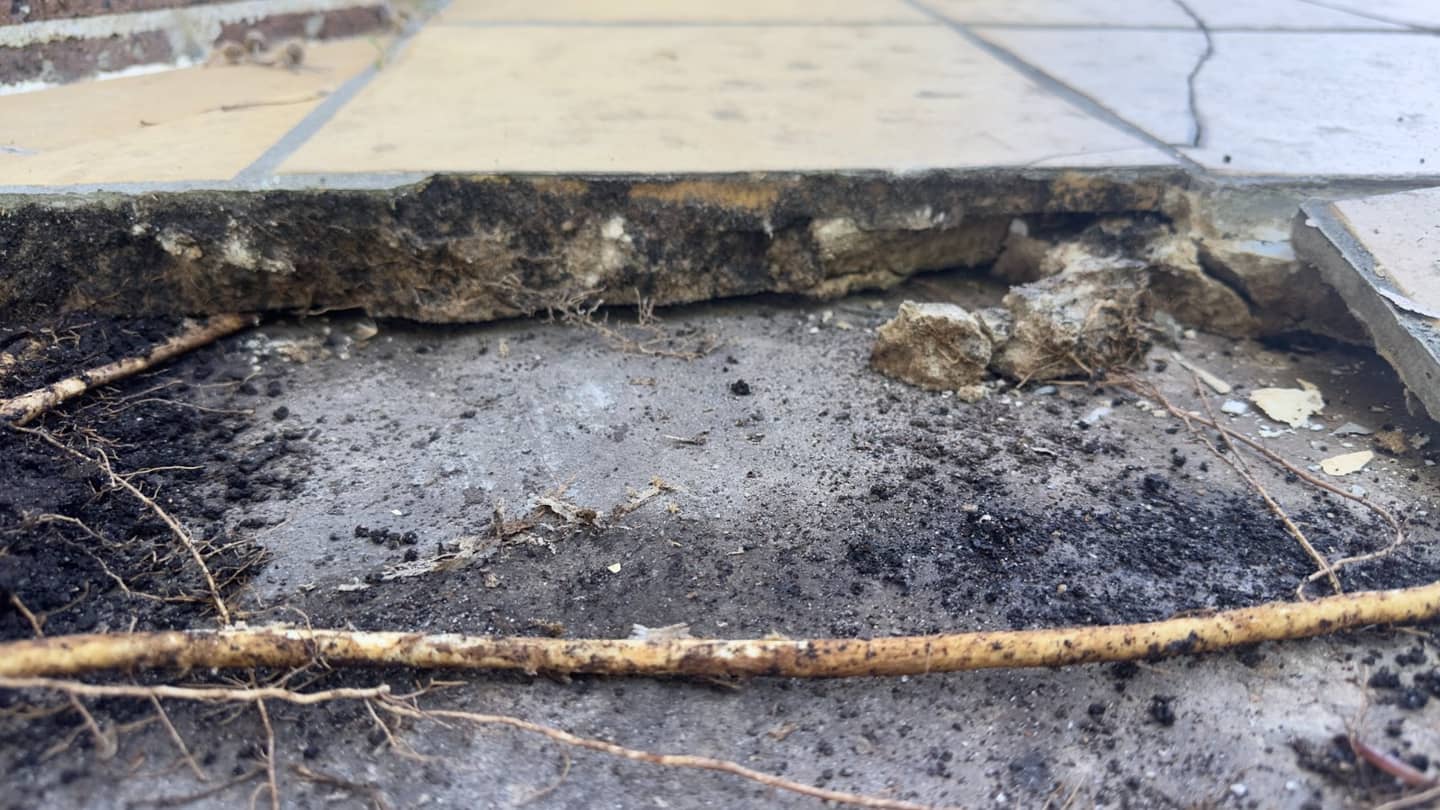
When roots get under your tiles
If the tiles on your patio, courtyard or balcony have started lifting, cracking, or sounding hollow, and there are garden beds, plants or trees nearby, there is a good chance the cause is under your feet: roots. Plant and tree roots are relentless. Over time they grow wherever there is moisture, including into the bedding and screed beneath your tiles. Once they are under there, they lift and crack the tiles from below.
It usually looks like a simple tiling problem. It rarely is. If you just re-lay the tiles, the roots come straight back and you are fixing it again in a year or two. We see this regularly on patios and balconies across Melbourne, and the fix that lasts is never as simple as new tiles.
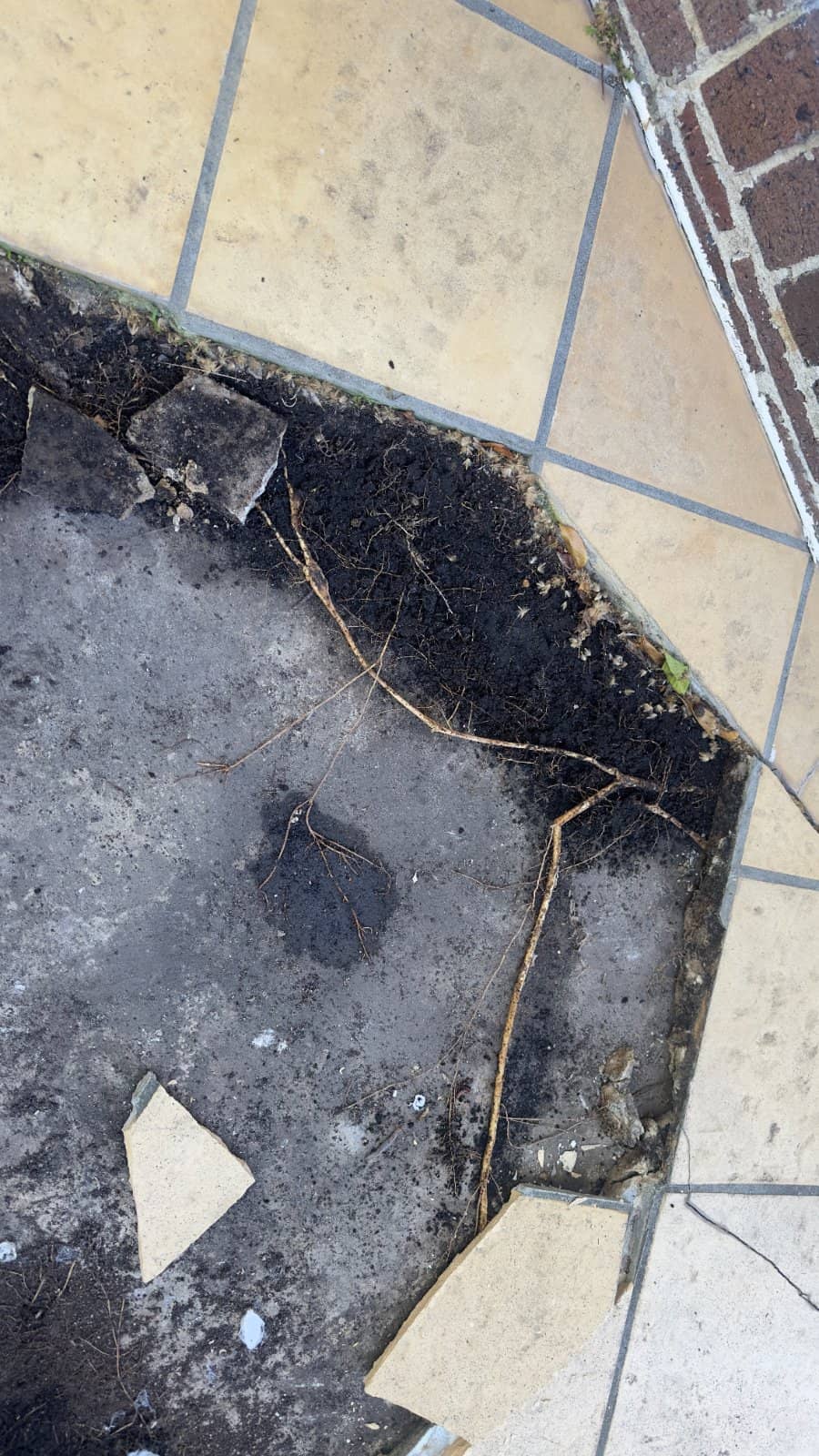
Why roots crack tiles from below
Roots seek out moisture and air, and the bedding and screed under tiles hold both, especially near garden beds and planting. As a root grows and thickens, it exerts enormous upward pressure. That pressure pushes the tiles up, breaks the bond holding them down (which is why affected tiles often sound drummy), and eventually cracks them. Because it happens slowly and from underneath, the tiles take the blame when the real cause is hidden below the surface.
Drummy, hollow-sounding tiles are worth understanding on their own, because roots are only one of several things that cause them. If your tiles sound hollow, our guide on why a problem keeps coming back after a repair explains why treating the symptom instead of the cause almost always fails.
Why you cannot just re-lay the tiles
The instinct is to lift the cracked tiles, pull out the visible roots, and put the tiles back. But that only treats the surface. The roots are still there, still growing, and nothing has been put in place to stop them. Within a season or two they find their way back into the same bedding and lift the tiles all over again. You have paid for a repair that was always going to fail.
A proper repair has to stop the roots from returning, not just clear them out of the way this once. That is the difference between a patch and a fix.
Re-laying tiles over an active root problem is not a repair. It is a countdown to the next one.
What a proper root-damage repair looks like
We recently repaired a patio in Melbourne where roots had got under the tiles and lifted and cracked them across a section. Here is how a lasting fix is done, and it is more than re-tiling:
- Lift the affected tiles and screed to expose what is actually going on underneath, rather than guessing from the surface.
- Check the slab. On this patio the concrete slab beneath was sound and only the screed had been disturbed, which is a good outcome. Where roots have reached and damaged the structure, that has to be repaired too.
- Install root barriers so the roots cannot grow back into the bedding and lift the tiles again. This is the step that turns a temporary repair into a lasting one.
- Rebuild properly. On this job we extended the patio at the front with a new concrete pour, then re-screeded and re-tiled the section, so it came back solid, level and watertight.
The result: the root damage sorted at the cause, the tiles solid underfoot again, and a barrier in place so the same thing does not happen in a couple of years.
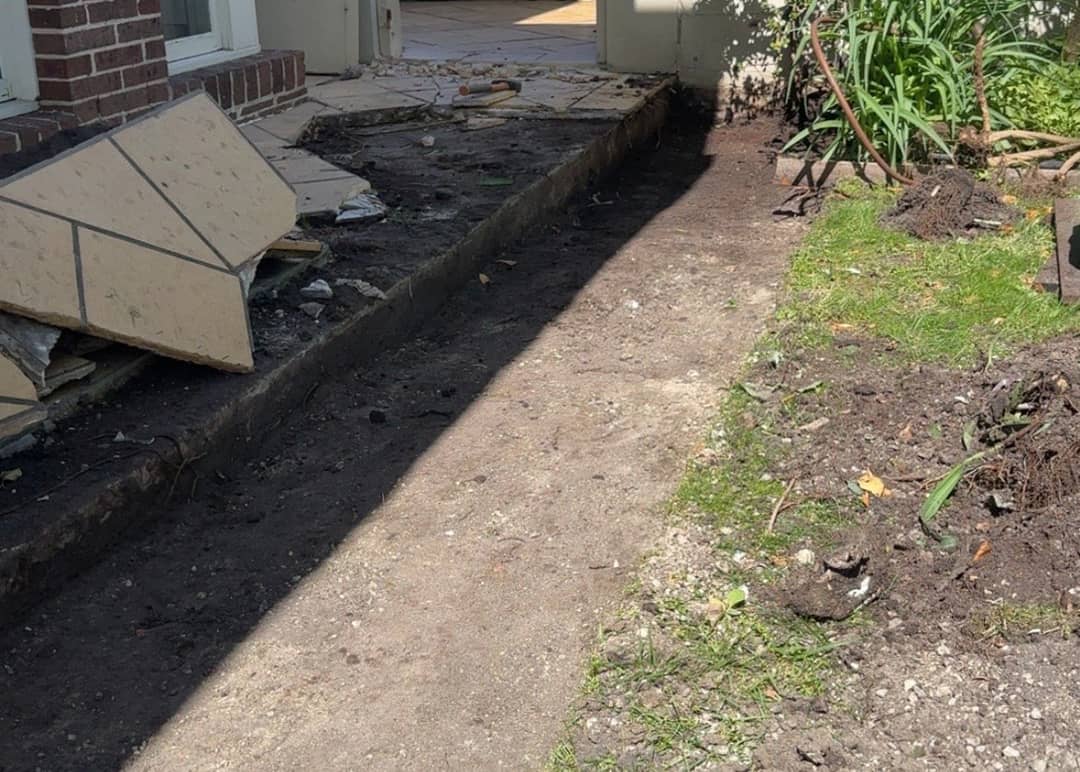
A note on balconies and terraces
On a ground-level patio like this one, the main risk is the tiles themselves. On a tiled balcony, terrace or podium over a living space, root intrusion is more serious, because there is a waterproofing membrane under the tiles protecting the structure and the rooms below. If roots crack the tiles there, they can also breach that membrane and let water into the structure, which is a far bigger job than a patio. If your affected tiles are on a balcony rather than the ground, our balcony waterproofing service covers exactly this kind of repair.
Signs roots may be under your tiles
Watch for tiles lifting or forming a raised line, especially near garden beds or plants, cracked tiles with no obvious impact cause, tiles that sound hollow or drummy underfoot, and gaps opening up at grout lines. The closer the damage is to planting, the more likely roots are the cause. Caught early, it is usually a contained repair. Left to spread, more of the tiled area lifts and the job gets bigger, so it is worth acting when you first notice it.
How Advance Waterproofing can help
When we are called to lifting or cracked tiles anywhere in Melbourne, we do not just re-lay the surface. We investigate what is going on underneath, deal with the root intrusion, install barriers so it does not return, repair the structure and waterproofing where needed, and reinstate the tiles properly. As registered building practitioners, we handle the whole job as one team, so it is fixed at every layer.
If your patio, courtyard or balcony tiles are lifting or cracking, we offer free on-site assessments across Melbourne. Book a free assessment and we will find out what is really going on under the tiles.
This article is general information only. The right repair for root-damaged tiles depends on what is found beneath the surface and should be confirmed by an on-site assessment.