
4 min read
Drummy Balcony Tiles: Do You Have to Replace Them All?
Drummy, leaking balcony tiles do not always mean a full strip and retile. Here is the cost-effective middle path that keeps your property value intact.
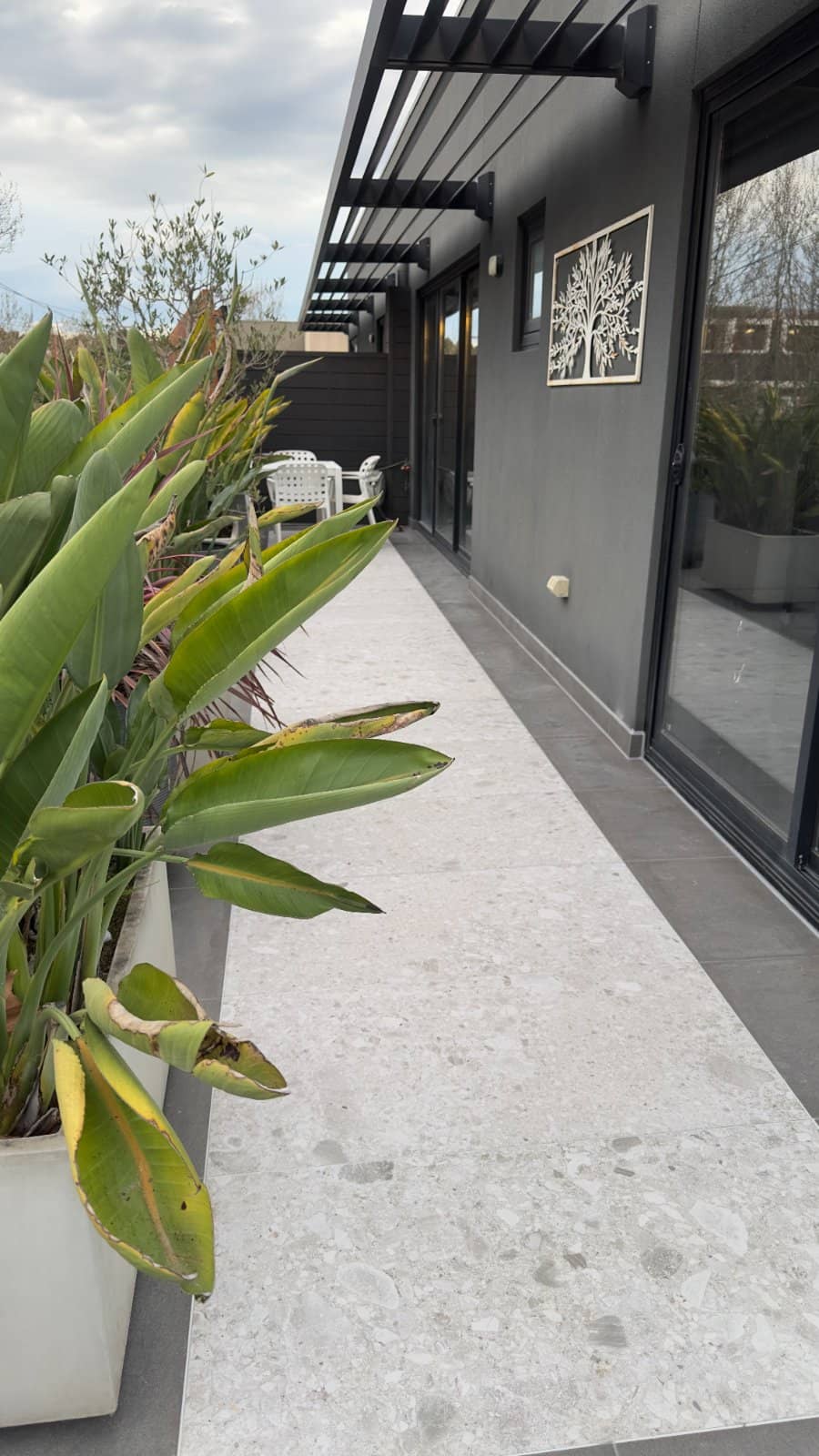
Drummy tiles do not always mean ripping up the whole balcony
If your balcony tiles sound hollow when you tap them, they are what we call drummy tiles, they have lost their bond with the surface underneath. When a balcony is also leaking, most people are told they have two options: rip up every tile and start again, or apply a cheap surface coating and hope it holds. Both are often wrong, and there is usually a smarter option in between.
We had a client recently in exactly this situation, and the way it was solved is a good lesson in how to fix a drummy, leaking balcony without overspending or hurting your property value. Here is how to think about it.

What drummy tiles actually mean
A drummy tile has separated from the adhesive or screed beneath it, which is why it sounds hollow. On a balcony, this often goes hand in hand with a waterproofing problem: water gets under the tiles, sits there, and breaks down the bond over time. So drummy tiles are frequently a symptom of a leak, not just a loose-tile issue.
This matters, because it changes what a proper repair has to achieve. It is not enough to re-stick the tiles. If water is getting in, the fix has to address the waterproofing underneath, or the problem simply comes back.
Why the cheap "quick fix" often is not a fix
There is a popular quick fix for drummy tiles: injecting adhesive or resin underneath to re-bond them, without lifting anything. It is cheap and fast, and for a dry internal floor with a couple of loose tiles, it can be fine.
But on a leaking balcony, it usually is not a real fix. Injection re-sticks the tile, but it does nothing to repair failed waterproofing underneath. The tile industry's own technical guidance is clear that resin injection is not a waterproofing process and should not be relied on where leaks are the problem. So you can spend money re-bonding the tiles and still have a leaking balcony, because the actual cause was never touched.
Why replacing every tile is not always necessary either
At the other extreme, people are often quoted to strip the entire balcony, every tile, back to the slab, and start again. Sometimes that genuinely is required, if the waterproofing has failed across the whole balcony, or the drumminess is widespread. But not always.
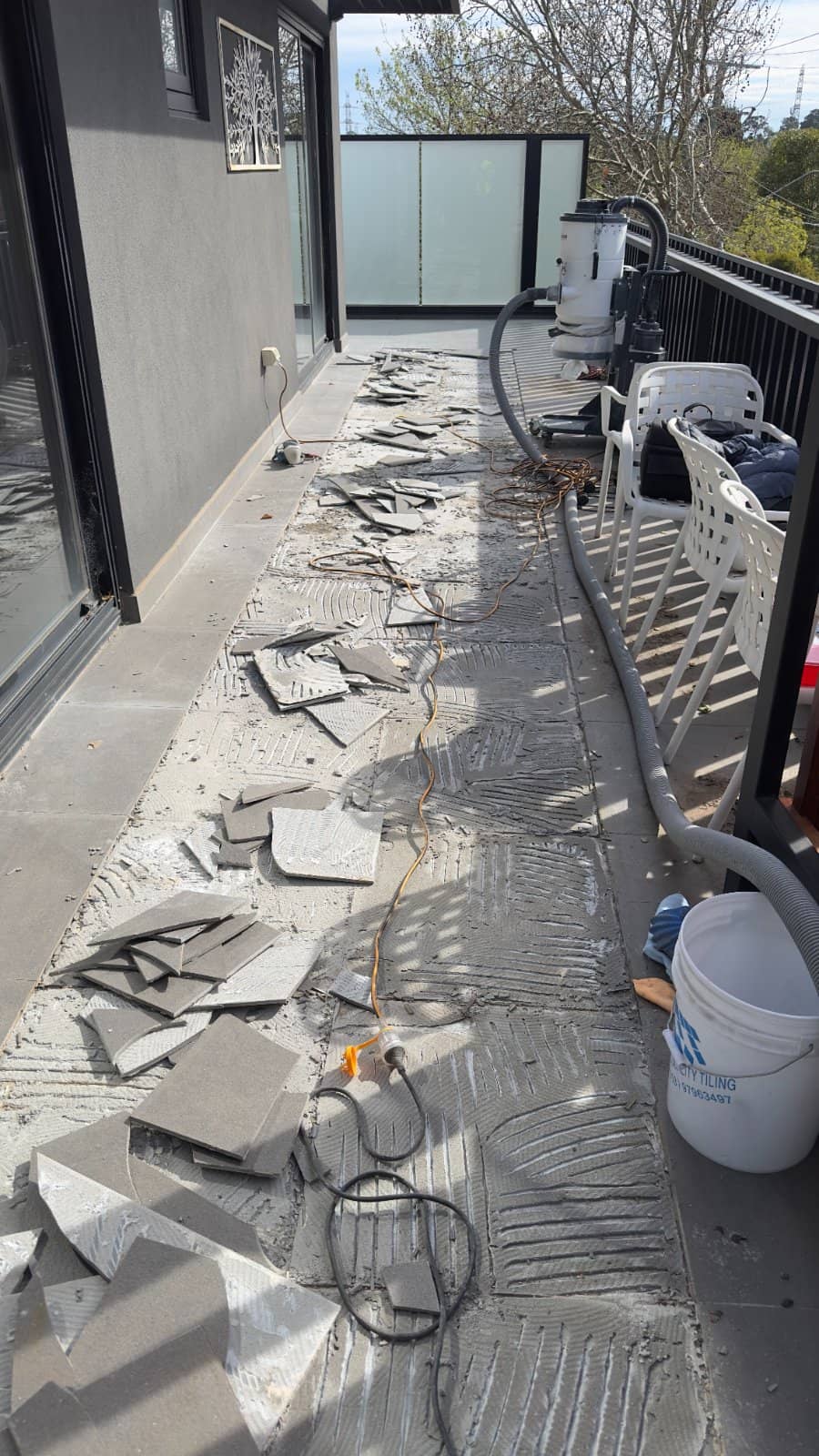
If the failure is concentrated in one area, it is often possible to lift only the affected tiles, repair the waterproofing in that section properly, and relay, rather than tearing up a balcony that is largely sound. Done correctly, this fixes the leak and the drummy tiles at a fraction of the cost and disruption of a full strip.
The problem nobody mentions: property value
Here is the part most quotes ignore. When you fix only a section of a balcony, you have to deal with the appearance. The cheap approach, coating a patch in epoxy or slapping down mismatched tiles, fixes the leak but leaves an obvious repair. A patched, mismatched balcony quietly drags down the value and appeal of the whole property. You save money on the repair and lose it again on the value of your home.
This was exactly the situation our recent client faced. They were leaning toward coating part of the balcony to save money. We talked them out of it, because it would have looked like a patch and cost them more in property value than they saved on the repair.
The smarter middle path
Instead of coating over the tiles or replacing all of them, we lifted only the tiles that had actually failed, repaired the waterproofing properly in that area, and relaid the section using a different, complementary tile, done deliberately as a feature rather than a repair.
The result: every drummy tile sorted, the balcony fully watertight again, and instead of an obvious patch that lowered the value, a deliberate design feature that kept the balcony looking intentional and cared for. The client fixed the leak, avoided the cost of a full strip, and protected their property value, all at once.
You do not always have to choose between a cheap patch that looks bad and a full strip that costs a fortune. Done thoughtfully, the middle path fixes the leak and protects your value.
The lesson for anyone with drummy, leaking balcony tiles
If your balcony tiles are drummy and it is leaking, do not assume your only choices are the cheapest coating or the most expensive full replacement. The right approach depends on how widespread the failure is, and it is worth getting it properly assessed before committing to either extreme. The key questions are: where is the water actually getting in, how much of the waterproofing has failed, and can the sound areas be kept?
It is also worth understanding why a leak keeps coming back after a repair, because the quick fixes that skip the waterproofing are exactly why so many balcony repairs fail twice.
How Advance Waterproofing can help
We assess drummy, leaking balconies properly before recommending anything, so you are not oversold a full strip you do not need, or sold a cheap patch that will not hold. As registered building practitioners, we repair the waterproofing and handle the tiling and finishing, so the whole job is done by one team and it actually looks right at the end.
If you have a drummy or leaking balcony and want to know your real options, we offer free on-site assessments across Melbourne. Book a free assessment and we will tell you honestly what it needs.
This article is general information only. The right repair for a drummy or leaking balcony depends on the extent of the failure and should be confirmed by an on-site assessment.